AI discoverability audit: how to run an AI visibility audit
An AI discoverability audit shows whether ChatGPT, Gemini and Google AI name and cite your brand, and why not. Steps, prompts and what to fix first.
An AI discoverability audit answers one question: when people ask AI assistants about your market, do the answers name your brand and link to your site, and if not, why not? You run it by asking a fixed set of real questions in ChatGPT, Gemini, Google AI Overviews and other engines, recording who gets mentioned and cited, reading the pages those answers cite, and checking whether your own site can be found and read by AI search.
The output is not a score. It is a short list of changes, each tied to the answers and pages that justify it: a review article you should be on, an owned page that does not answer the question, a missing comparison page or a robots.txt rule that blocks AI search.
You will also see this called an AI visibility audit, a GEO audit or an AEO audit. They describe the same job. This guide walks through it step by step, by hand and with SEO Sauna's AI Visibility Audit skill.
What an AI discoverability audit measures
Classic SEO audits check whether Google can crawl, index and rank your pages. An AI discoverability audit adds three things on top:
- Mentions: does the answer name your brand when someone asks a neutral question, such as "best invoicing app for freelancers"?
- Citations: does the answer link to a page on your site as a source?
- Competitors and sources: which brands appear instead of you, and which pages does the engine cite when it names them?
The last point is where the useful findings are. AI answers are built from sources. If three engines recommend the same competitor and cite the same two review articles, the fix is usually about those articles, not about your homepage.
What an audit cannot measure: how many people ask a given question in ChatGPT. Nobody outside the AI companies has that number. Any tool that shows "AI search volume" is estimating. Be suspicious of single "AI visibility scores" for the same reason.
Step 1: Choose 10–15 neutral questions
The audit is only as good as the questions. Pick questions a buyer would ask before they know your name:
- "What is the best [category] for [audience]?"
- "[Competitor] alternatives for [use case]"
- "How do I [job your product does]?"
- "Which [category] works with [tool your buyers use]?"
Group them into two or three topics you actually sell into. Keep branded questions ("is Acme good?") separate. They tell you something, but they inflate your mention rate if you mix them in.
To find questions with real demand, start from a keyword. SEO Sauna's Prompt Research takes a keyword and returns the questions people ask about it, mostly from Google's "People also ask" data, together with ChatGPT's answers and the sources it cites. It covers US English and costs about €0.25 in credits per keyword. The AI Prompt Research skill runs this for you before you commit to tracking.
Step 2: Collect answers across engines
Asking each question once in your own ChatGPT account is not an audit. Answers vary between runs, your account history colours them and you cannot repeat the check next month.
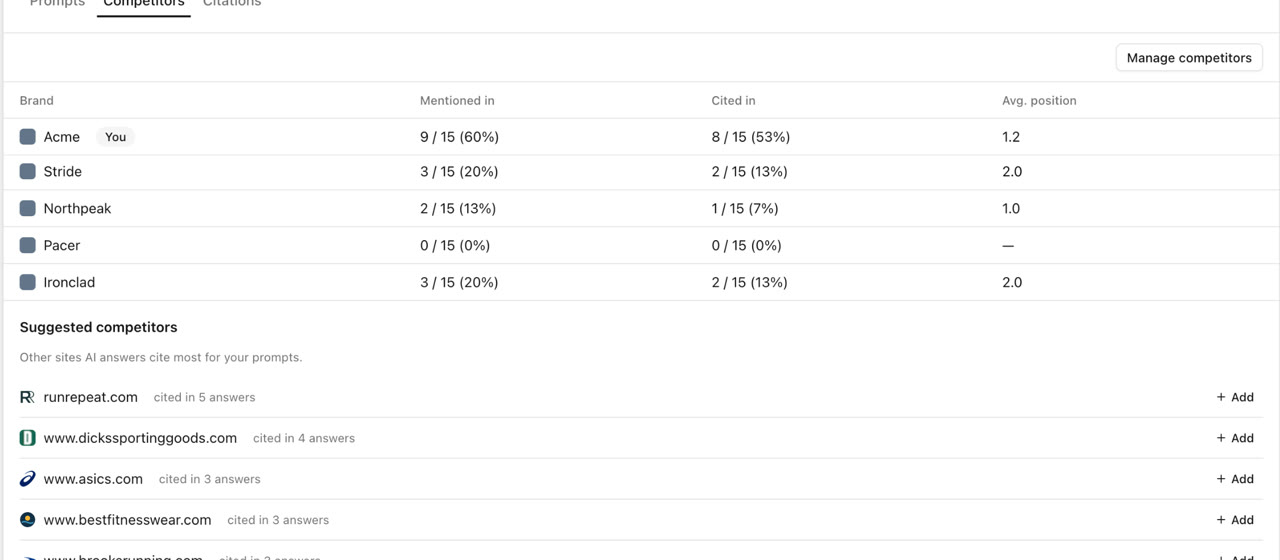
Instead, save the questions and collect them in a controlled way. In SEO Sauna, Prompt Tracking saves exact questions under topics, lets you pick engines and a market, and runs a check now or on a daily, weekly or monthly schedule. ChatGPT and Gemini are selected by default. Google AI Overviews, Claude and Perplexity are also supported. You see a cost estimate before anything runs, and Prompt Tracking works on trial credits.
Two details matter when you read the results later:
- ChatGPT and Gemini answers are collected from their consumer sites. Claude and Perplexity are checked through their model APIs, which costs more per answer.
- A failed collection is not evidence that your brand was absent. Count only answered collections.
Step 3: Record mentions, citations and gaps
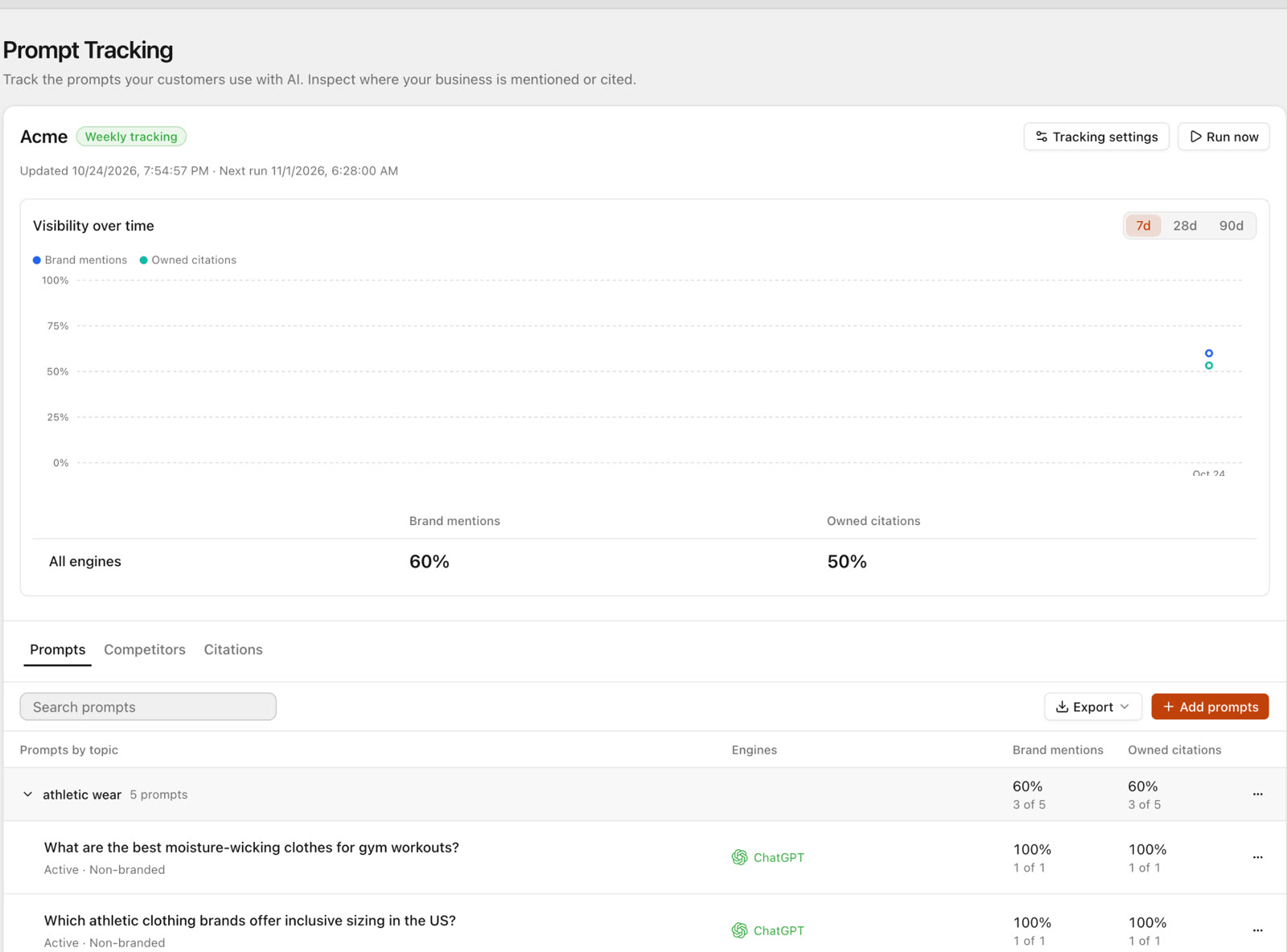
For each topic and engine, write down four numbers: answers collected, answers that mention you, answers that cite your site, and which competitors appeared. Then list the gap prompts: questions where a competitor is named and you are not. These are the raw material for every recommendation.
In SEO Sauna, the Competitors and Citations tabs in Prompt Tracking show this per run. Your brand counts as mentioned when its name or domain appears in the answer, and as cited when the answer links to your site. Viewing and exporting saved results uses no credits.
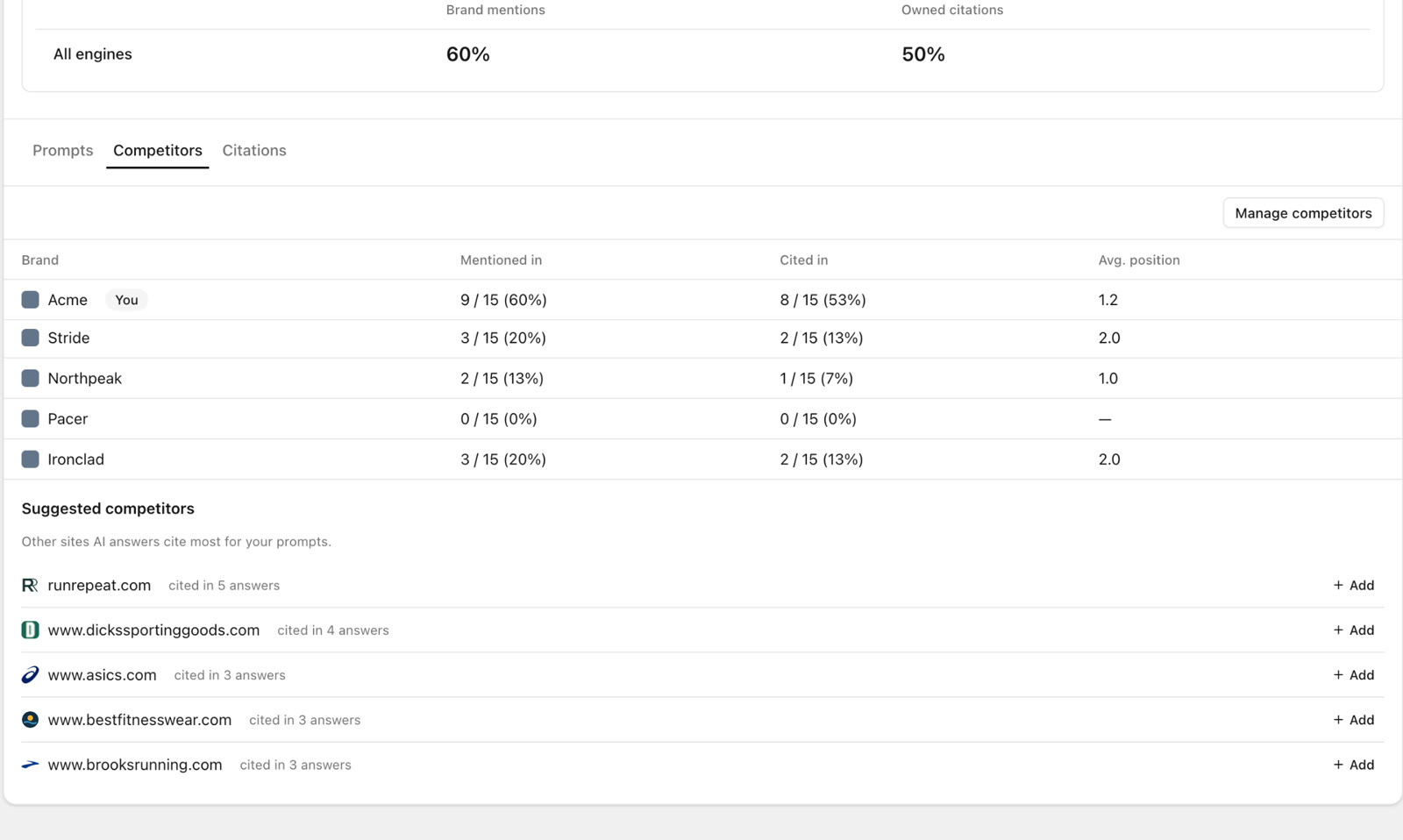
A practical check before you trust the numbers: make sure the brand name in your project is how people actually write it. If your project is called "Acme website" but answers say "Acme", mentions will be undercounted.
Step 4: Follow the citations
Open the sources tab and sort by how often each page is cited in answers where you are missing. Classify the top 10–15:
| Source type | What to check | Typical fix |
|---|---|---|
| List or review article ("best X tools") | Are you listed? Is there an author, update date or submission form? | Outreach to get included |
| Forum or community thread | Are you named? Is the thread still active? | Answer honestly where the community allows it |
| Competitor page | Which question does it answer that no page of yours does? | Build or improve the matching page |
| Your own page | Is it cited for the right question? | Strengthen what already works |
| Reference or editorial | Docs, news, encyclopedic pages | Longer-term PR and documentation |
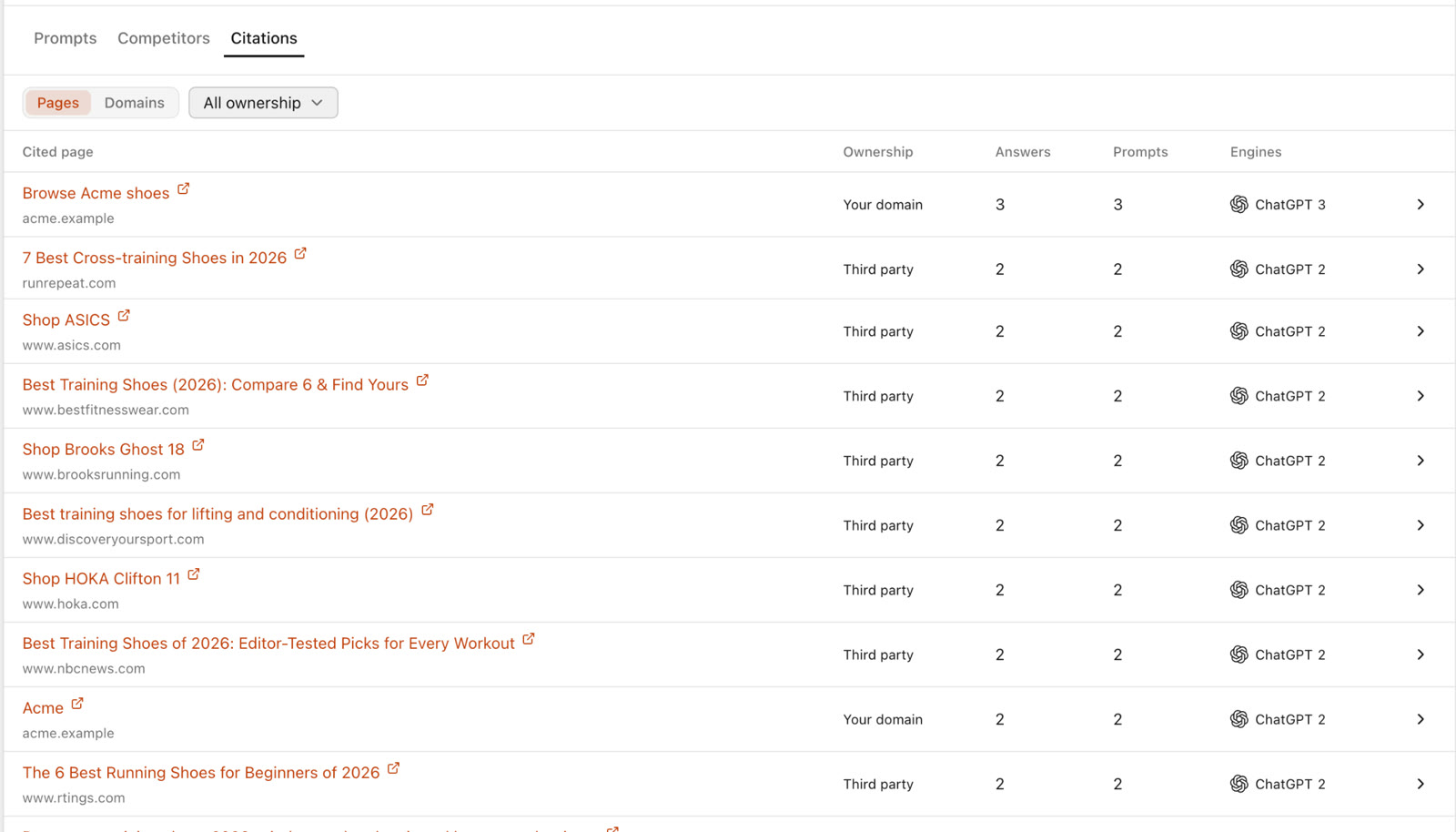
Read the five or six sources that decide the outcome. A page appearing next to a competitor does not prove it mentions that competitor, so check before you claim it.
It also helps to see what the engine searched for before answering. SEO Sauna's Prompt Explorer (explore_prompt from your assistant) asks ChatGPT one prompt through its API and returns the answer, the citations and the fan-out queries, the web searches the model ran. If a cited page ranks for those searches and yours does not, you have found the mechanism behind the citation.
Step 5: Check your own site's discoverability
This is the part most people skip, and it is sometimes the whole answer.
Crawler access. Read your robots.txt. Blocking OAI-SearchBot, or the whole site, is a real barrier for ChatGPT search. Blocking GPTBot or Google-Extended affects model training, not live answers. PerplexityBot, ClaudeBot and ChatGPT-User are worth checking too. Report exactly what is blocked and what that rule controls.
The page that should be cited. For each gap prompt, find the page on your site that best answers it and read it next to the most-cited competing page. Does yours answer the question directly near the top? Does it have the specific facts, prices, comparisons or examples the cited page has? Can it be read without logging in or running heavy JavaScript? If no page answers the question at all, that is the finding.
Search behind the answer. AI search engines retrieve web pages, so ordinary rankings still matter. Check the live Google results for the fan-out queries from Step 4.
Step 6: Shortlist, then pick one to three changes
Write five to eight candidate actions of at least two kinds: get onto a recurring third-party source, improve an owned page, create a missing page (comparison, alternatives, use case), remove an access barrier, or join a recurring community thread. For each, note the prompts it serves, the evidence, the effort and the main uncertainty.
Then pick one to three. Prefer actions that match a pattern across several prompts and engines over one that fits a single answer. A real access barrier goes first. Everything else goes in a "what else we checked" list with a reason, so nobody re-investigates it next month.
Keep tracking after you ship. No change guarantees a future mention. The trend in Prompt Tracking is how you find out whether it worked.
Run the audit with SEO Sauna's AI Visibility Audit skill
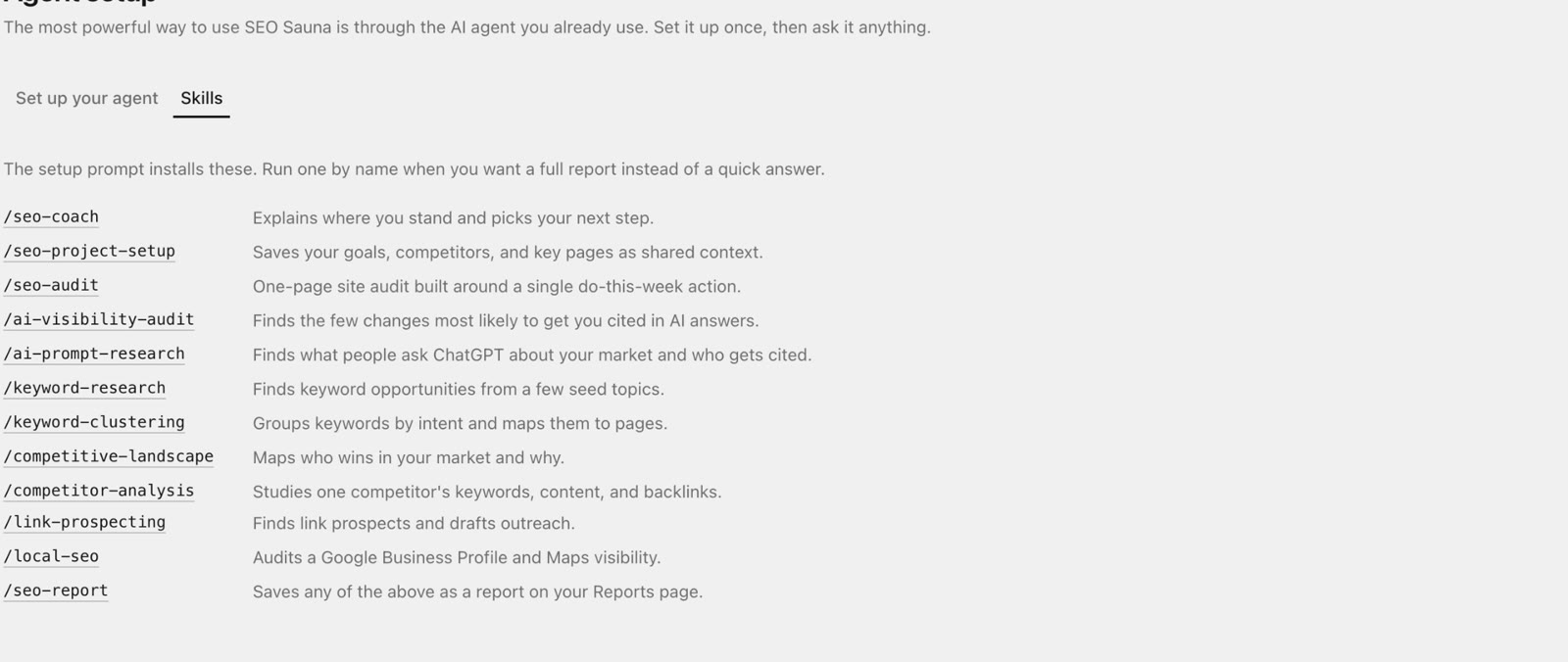
The steps above take a day by hand. With SEO Sauna connected to Claude, Codex or another agent through MCP, the AI Visibility Audit skill runs the same method:
- It reads your project context (business, website, competitors) and your Prompt Tracking setup.
- If you already track prompts, it uses your latest completed run and buys no new tracked answers. If you do not, it proposes 10–15 neutral prompts, shows the cost and runs one check after you approve.
- It reads mentions, citations and gap prompts, follows the most-cited sources and reads the pages that matter.
- It checks your
robots.txtand the owned pages that should be cited, and may ask ChatGPT one or two gap prompts directly to see the fan-out searches (a small amount of credit, and it tells you first). - It saves a short report to your project: where you stand, one to three recommendations with evidence tables, the sources AI cites in your market and what else it checked.
Example prompts to paste into your assistant:
Use the AI Visibility Audit skill for acme.example. Focus on the "invoicing for freelancers" topic and tell me why ChatGPT and Gemini recommend competitors instead of us.
Before running anything, show me the prompts you would track and the cost of one check. Pause the schedule afterwards; I only want this audit.
From my latest Prompt Tracking run, list the five pages cited most often in answers that name a competitor but not us. Read them and tell me which ones list us and which accept submissions.
Without skills installed, for example in a ChatGPT custom connection, you can ask for the same steps in plain language and the assistant will use the same tools.
What it costs
SEO Sauna is €59 a month excluding VAT with 17,000 credits included, and top-ups are €1 per 1,000 credits. New accounts get 1,000 free trial credits with no card, which is enough to run a small Prompt Tracking check. Prompt Research and Prompt Explorer need the paid plan. See the AI visibility overview for what SEO Sauna covers. Details are in the AI Visibility guide and SEO Sauna 101.
Start a free account and run your first check.
FAQ
What is an AI discoverability audit?
It is a review of whether AI assistants such as ChatGPT, Gemini, Claude, Perplexity and Google AI Overviews mention and cite your brand for the questions buyers ask, which sources they use instead, and what on your site or elsewhere you should change to be found.
Is an AI discoverability audit the same as an AI visibility audit or GEO audit?
Yes, in practice. The names differ, the method is the same: fixed questions, answers collected across engines, citations followed and a short list of fixes.
How many prompts do I need?
Ten to fifteen neutral prompts across two or three topics is a good start. With fewer than about ten, treat the findings as directions to check rather than conclusions, because each prompt gives one answer per engine per run.
Can I see how many people ask ChatGPT my questions?
No. That data is not public. Prompt Research shows which questions people ask around a keyword and what sources ChatGPT cites, but it does not estimate AI demand.
How often should I re-run the audit?
Track the prompts weekly or monthly, and re-run the full audit after you ship a recommendation or every quarter. Compare runs with the trend chart rather than single answers.
Related reading: how to track brand mentions in ChatGPT, ChatGPT rank tracker and AI Overview tracker.
More from the blog
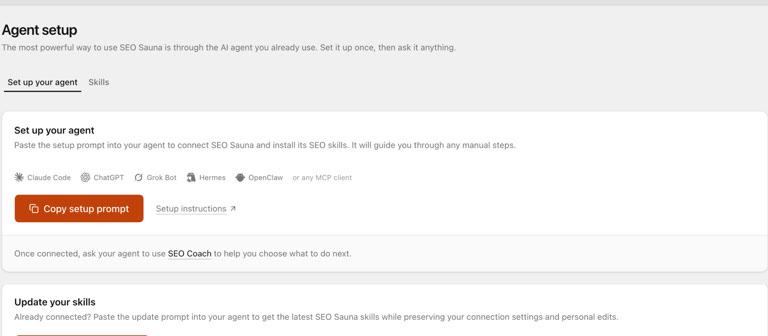 ChatGPT MCP server for SEO: connect live SEO data
Connect an SEO MCP server to ChatGPT as a custom connection on Free or paid plans: step-by-step setup, error fixes and SEO prompts with real keyword data.
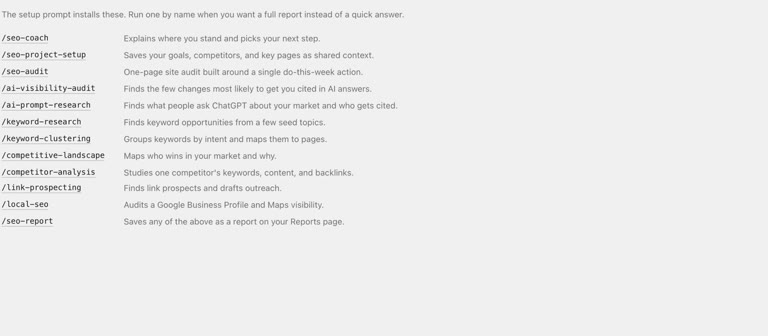 Claude MCP server for SEO: setup, skills and prompts
Add an SEO MCP server to Claude Desktop, claude.ai or Claude Code in five minutes, install SEO skills and paste prompts that use live keyword data.