AI Overview tracker: how to see if Google's AI cites you
Find out which keywords trigger Google AI Overviews, whether the overview cites your site and which tools track it, plus what to do with the results.
Google now answers many searches with an AI Overview before the first blue link. For informational queries it can push your number one ranking well below the fold. The page that matters is often no longer the top result, but the one the overview cites.
The problem is that your usual reports do not show this clearly. A rank tracker tells you that you are in position 2. Search Console tells you that clicks dropped. Neither tells you, keyword by keyword, whether an AI Overview appeared and whether it linked to you.
This guide covers what an AI Overview tracker should measure, which tools do it today, how SEO Sauna tracks AI Overviews alongside ChatGPT and Gemini, and what to change once you have the data.
Why you need a separate view for AI Overviews
AI Overviews are not a ranking position. They are a block that Google generates for some queries, in some markets, some of the time. Inside the block, Google links to a handful of sources. Those sources are not always the pages ranking in the top three.
Google says that sites appearing in AI features are counted in the normal Search Console performance data, under the "Web" search type (Google's documentation on AI features). There is no separate AI Overview filter. So you can see total impressions and clicks, but not which of them came from an overview, or which overviews you were missing from.
That is the gap a tracker fills. Three facts per keyword:
- Does an AI Overview show for this query in the market you care about?
- Is your site cited as one of the sources?
- Who is cited instead when you are not?
What to measure
Presence rate
Start with how many of your tracked keywords trigger an AI Overview. If 60% of your blog keywords show one and 5% of your product keywords do, you know where the change in click behaviour is coming from.
Presence changes. Google expands and pulls back AI Overviews by query type and country, so this number is worth tracking over time rather than checking once.
Citation rate
Of the keywords that trigger an overview, how many cite your domain? This is the number you want to grow. A keyword where you rank in position 4 and get cited in the overview can be worth more than a keyword where you rank in position 2 and are left out.
Mentions without links
Sometimes the overview names your brand in the text without linking to you. That still matters for brand searches, but it is a different signal from a citation. Keep the two apart.
Competitor and third-party citations
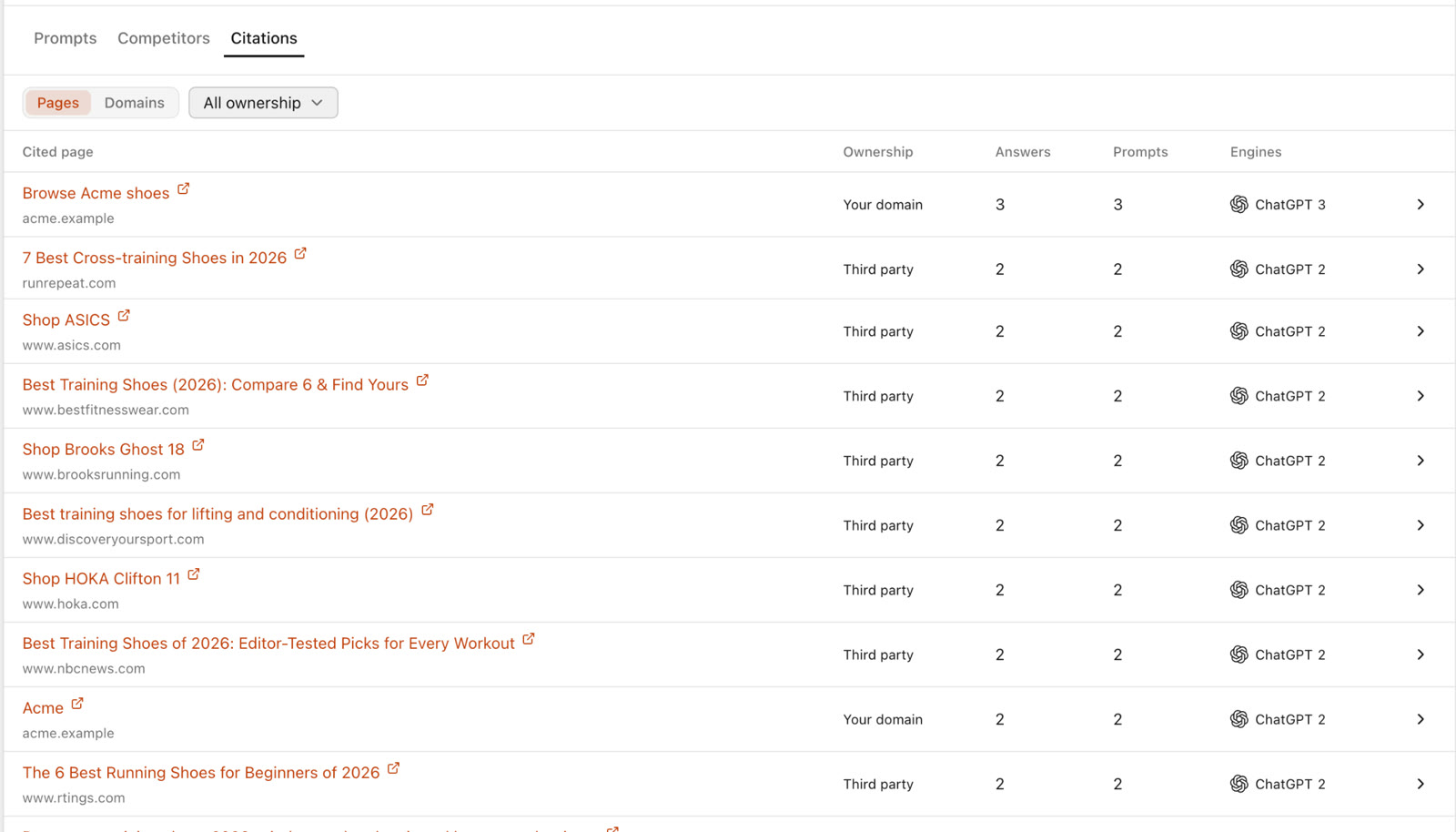
When you are not cited, look at who is. It is often not your direct competitor but a review site, a forum thread, a comparison article or a government page. Those pages tell you what kind of source Google trusts for that question.
Overlap with your organic rank
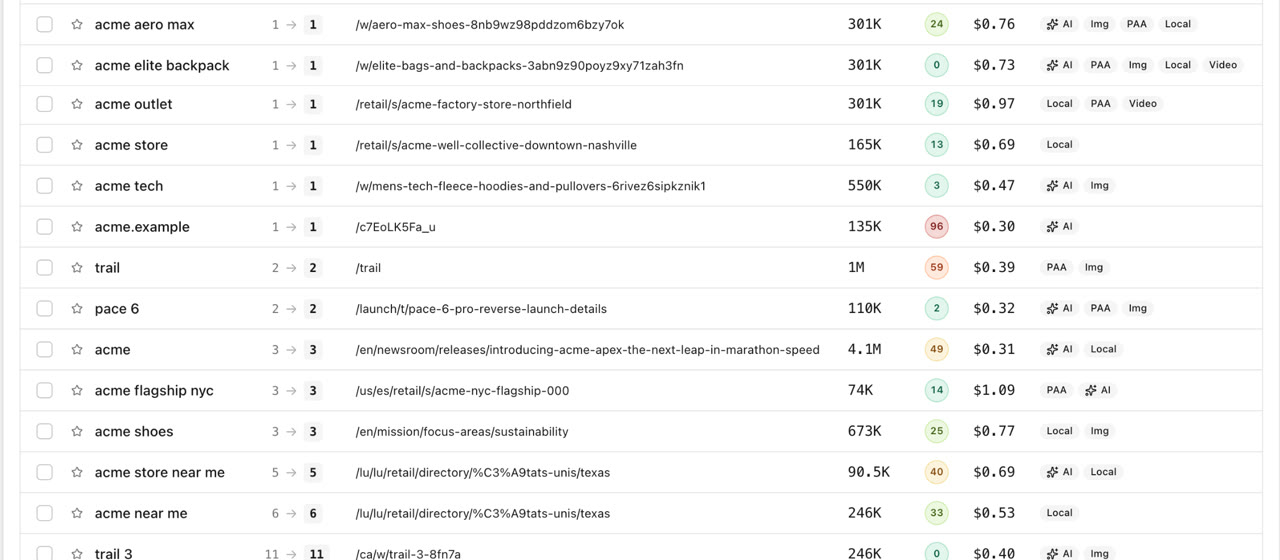
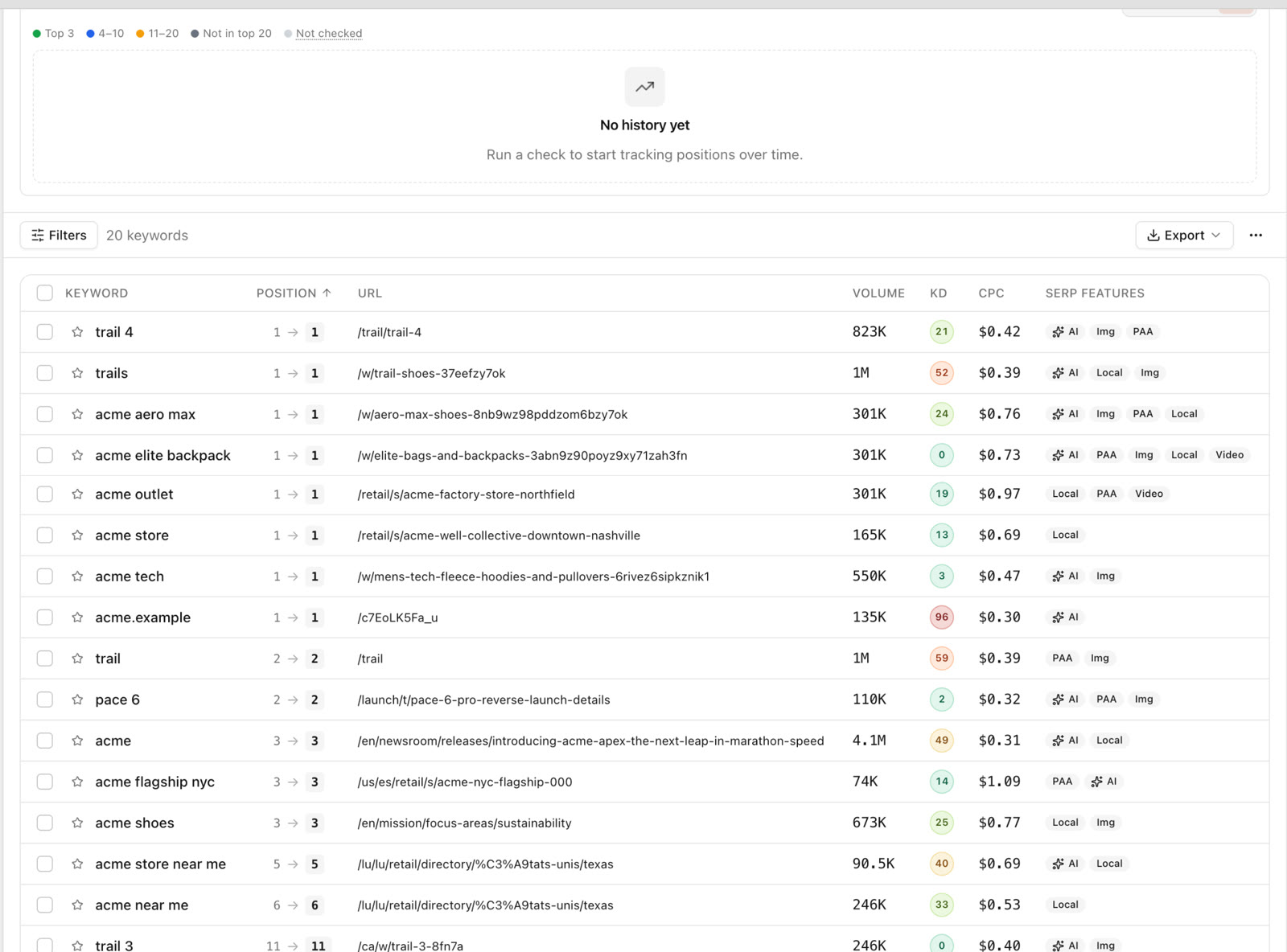
Put the AI Overview data next to your normal rank tracking. The useful cases are the mismatches: you rank well but are never cited, or you rank on page two and are cited anyway.
How AI Overview trackers work
There are two broad approaches, and many tools now offer both.
Keyword based. The tool runs your tracked keywords as Google searches, detects whether an AI Overview appears and records the sources in it. This is an extension of classic rank tracking. It is the right fit if you already have a keyword list and want to know what is happening to it.
Prompt based. The tool asks AI engines fixed questions on a schedule and records mentions and citations. This covers ChatGPT, Gemini, Perplexity and others as well as Google. It is the right fit if you care about where buyers ask for recommendations, not only where they search.
Both approaches share the same limits. AI answers vary between runs, by location and by personalisation. One check is a sample, not a fact. A tracker earns its keep by asking the same thing repeatedly and keeping the history.
Tool options
Several established SEO tools now track AI Overviews. These are the ones we checked on the vendors' own sites in October 2026.
| Tool | How it tracks AI Overviews | Notes |
|---|---|---|
| Semrush Position Tracking | Filter tracked keywords by the AI Overviews SERP feature and see whether your site was featured | Keyword based, inside the rank tracker you may already use |
| SE Ranking Rank Tracker | Monitors AI Overviews as one of its tracked SERP features; separate AI Results Tracker for prompts | AI search tracking also covers ChatGPT, Google AI Mode and Gemini |
| Ahrefs Brand Radar | Tracks brand visibility across AI Overviews, AI Mode, ChatGPT, Perplexity, Gemini and Copilot; Custom Prompts for your own questions | Custom Prompts start at $50/month, free on paid Ahrefs Lite plans and above (as of October 2026) |
| SEO Sauna Prompt Tracking | Fixed questions on a schedule across ChatGPT, Gemini and optionally Google AI Overviews, Claude and Perplexity | Credit based, cost estimate before each check, included in the €59/month plan |
What the big suites do better: they have years of SERP history, large keyword databases and AI visibility data at market level, not only for the questions you choose. If you need to see AI Overview presence across millions of keywords you never tracked, Ahrefs and Semrush have more data than a focused tool.
What a focused tool does better: it measures the specific questions your buyers ask, on the engines you choose, without a separate subscription for each add-on.
How SEO Sauna tracks AI Overviews
SEO Sauna handles AI Overviews inside Prompt Tracking, the same place you track ChatGPT and Gemini. The idea is that a buyer's question does not care which engine answers it, so you should see all the answers in one view.
The setup:
- Save the exact questions under topics, for example "pricing", "alternatives" or "how to". A question can be a short keyword-style query or a full sentence.
- Choose the engines. ChatGPT and Gemini are selected by default. Add Google AI Overviews, and if you want, Claude and Perplexity.
- Choose the market and the schedule: daily, weekly or monthly. Turning tracking on starts an initial check.
- Check the cost estimate. SEO Sauna shows it before anything runs, then bills each check as it collects answers. Checks stop when your credits run out, so there are no surprise invoices.
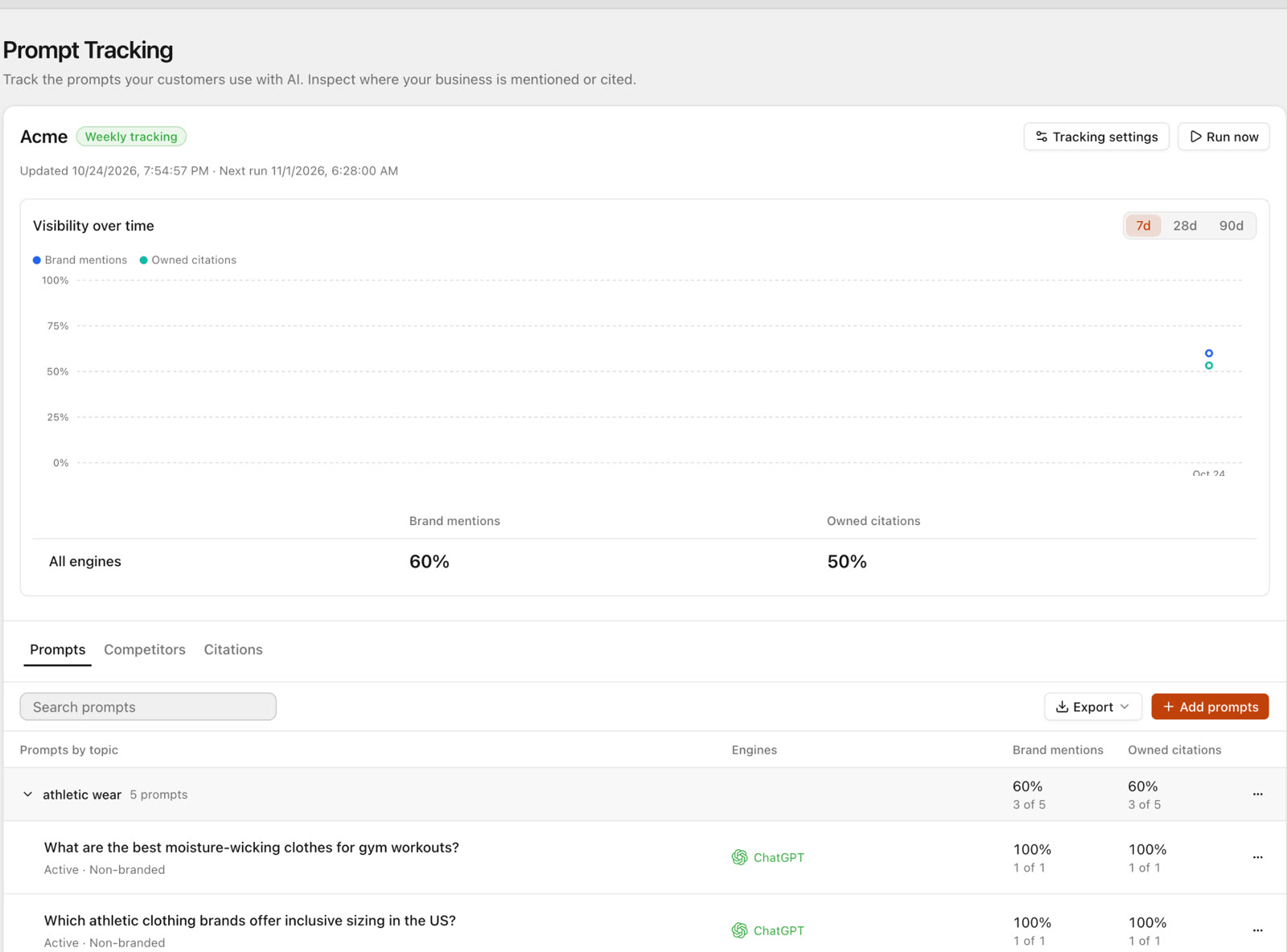
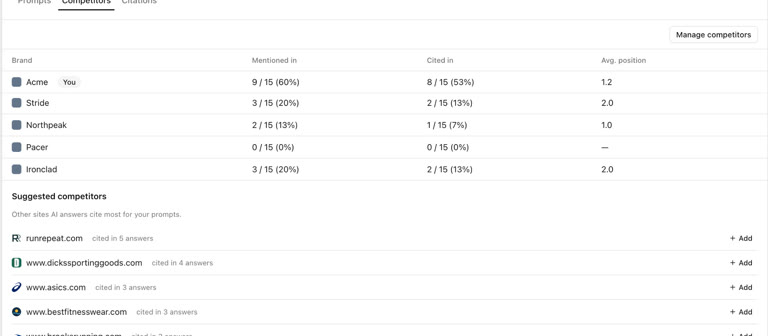
Once checks run, the Competitors and Citations tabs show who appears and which pages are cited. Your brand counts as mentioned when its name or domain appears in an answer, and as cited when the answer links to your site. The trend chart uses the latest finished run per day.
Two rules keep the data honest. Editing a question's wording creates a new question, so old answers keep the wording they were collected for. And a failed check is not treated as evidence that you were absent.
If you want ideas for which questions to track, Prompt Research takes a keyword and finds the questions people ask about it, mostly from Google "People also ask" data. That makes it a natural source of AI Overview style questions. It covers US English, costs about €0.25 in credits per keyword and needs the paid plan. Prompt Tracking itself needs only credits, so you can try it with the 1,000 trial credits you get at signup.
For classic positions, use SEO Sauna's rank tracker next to it. As a rough guide, 100 keywords on one device, five pages deep, checked weekly costs about €1–2 a month. See best rank trackers for how it compares.
What to do with the results
Tracking is only useful if it changes what you publish. These are the patterns worth acting on.
You rank but are not cited
This is the most common and most fixable case. Check what the cited pages have that yours does not. Usually it is a direct answer near the top, a clear definition, a short list of steps, or a specific number. Rewrite the opening of your page so the answer to the question is in the first two or three sentences.
Third-party pages are cited instead of anyone's site
If the overview cites a review site, a forum or a comparison list, that page is shaping the answer. Getting included or reviewed there is closer to digital PR than to on-page SEO, and often faster than trying to outrank it.
A competitor is cited from one page
Open that page. It is often a well-structured comparison, an honest pricing explanation or a "who this is for" section. If you do not have an equivalent page, write one that is more specific and more current.
No AI Overview at all
For many commercial and local queries, Google shows no overview. Do not spend effort here on AI optimisation. Classic rankings and click-through rate are still what count, so focus on titles, meta descriptions and the page itself.
Presence rises, clicks fall
If more of your keywords start showing overviews and Search Console clicks drop while impressions hold, the overview is answering the question on the results page. Look at whether those pages need to exist for clicks at all, or whether a more commercial angle would serve the same visitor better.
After each change, keep the tracking running. Compare the citation rate for those questions over the next four to eight weeks rather than reacting to one check.
Do it from your AI assistant
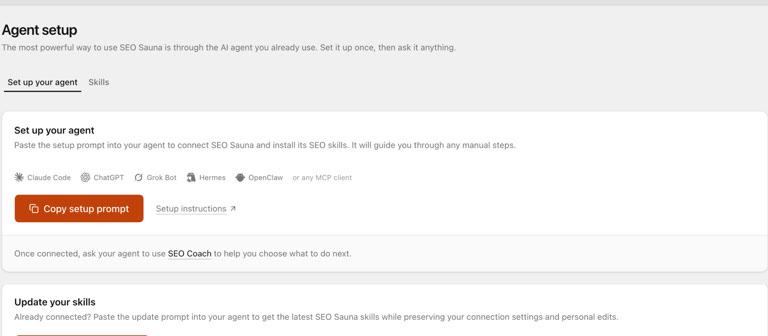
All of this works through SEO Sauna's MCP server, so you can run it from Claude, ChatGPT or Cursor:
Take our 20 most important blog keywords, set up weekly prompt tracking on Google AI Overviews, ChatGPT and Gemini in the US, and show me the cost estimate before you start.
Compare our Search Console clicks for those pages with the tracked AI Overview citations. Which pages rank well but are never cited?
The second prompt uses Search Console data, which costs no credits to read. The AI Visibility Audit skill turns the review into a repeatable checklist. For the full mentions and citations workflow, see how to track brand mentions in ChatGPT and the ChatGPT rank tracker guide. To find out why you are not cited and what to change, run an AI discoverability audit, and see the AI visibility overview for everything SEO Sauna tracks.
FAQ
Does Google Search Console show AI Overview data?
Not separately. Google counts appearances in AI features within the normal Web search performance data, so you see the total but cannot filter for AI Overviews. A tracker fills that gap keyword by keyword.
How often should I check AI Overviews?
Weekly is a good default. AI Overviews change often, so one check is a sample, and a weekly history shows the trend without much cost. Use daily checks around a launch or a major content update.
Can I get cited in an AI Overview without ranking in the top 10?
It happens, but strong organic rankings make it much more likely. Treat AI Overview citations as something you earn with the same pages that rank, written so the answer is easy to find and quote.
Does SEO Sauna track Google AI Mode?
SEO Sauna's Prompt Tracking supports ChatGPT, Gemini, Google AI Overviews, Claude and Perplexity. AI Mode is not in that list today.
Is AI Overview tracking included in the SEO Sauna plan?
Yes. Prompt Tracking runs on credits, and the €59/month plan (excl. VAT) includes 17,000 credits a month. You see a cost estimate before each check or schedule starts, and trial credits work too.
More from the blog
 AI discoverability audit: how to run an AI visibility audit
An AI discoverability audit shows whether ChatGPT, Gemini and Google AI name and cite your brand, and why not. Steps, prompts and what to fix first.
 ChatGPT MCP server for SEO: connect live SEO data
Connect an SEO MCP server to ChatGPT as a custom connection on Free or paid plans: step-by-step setup, error fixes and SEO prompts with real keyword data.