ChatGPT rank tracker: how to measure visibility in ChatGPT
There is no position 1 in ChatGPT. What a ChatGPT rank tracker really measures, how to set one up with fixed questions and a schedule, and its limits.
If you have done SEO for a while, the natural question about ChatGPT is "where do we rank?" You want a number, a trend line and a weekly report, the same as for Google.
The trouble is that ChatGPT has no rankings in that sense. There is no results page with ten positions. There is a written answer that names some brands, links to some sources and changes a little every time someone asks.
This article explains how to think about a ChatGPT rank tracker, what it should measure instead of positions, how to set one up so the numbers mean something, and where the honest limits are.
Why "ranking in ChatGPT" is the wrong mental model
A Google rank tracker works because the results page is fairly stable. Search a keyword from the same location and you get roughly the same ten links in roughly the same order. Position 3 is a real, repeatable fact.
A ChatGPT answer is different in three ways:
- It is generated, not listed. The model writes a paragraph. Your brand is either in it or not, and its place in the paragraph is not a ranking.
- It varies between runs. Ask the same question twice and the list of brands can change, even for the same user.
- It depends on the question's wording. "Best CRM for small agencies" and "which CRM should a five-person agency use" are different prompts with different answers. There is no single keyword to own.
So "we rank 2nd in ChatGPT" is not a meaningful statement. "We were mentioned in 14 of 20 tracked answers this month, up from 9, and cited in 6" is.
What a ChatGPT tracker measures instead
Replace positions with three counts per question.
| Classic rank tracker | ChatGPT tracker |
|---|---|
| Keyword | Exact question (prompt) |
| Position 1 to 100 | Mentioned or not mentioned |
| Ranking URL | Cited page, if the answer links to you |
| Competitors' positions | Competitors mentioned in the same answer |
| Search volume | No reliable equivalent |
| Visibility score | Share of tracked answers that mention or cite you |
Mentions tell you the model knows your brand and considers it relevant. Citations tell you it trusts a specific page of yours enough to link to it. Competitor appearances tell you who you are being compared with, which is often not who you expect.
The useful number is a rate across many questions and many checks. One answer is an anecdote. Twenty questions checked weekly for two months is a measurement.
How a ChatGPT tracker works
Under the hood, every serious ChatGPT tracker does the same four things.
1. Fixed questions
You save a list of exact questions and the tracker asks them word for word every time. This is the equivalent of a keyword list. If the wording drifts, the data stops being comparable.
2. A schedule
The tracker asks those questions daily, weekly or monthly and keeps every answer. Repetition is what turns variable answers into a trend.
3. A market
Answers depend on location and language. A tracker should let you choose the market, so a Finnish software company tracking the US market sees answers from the US, not from its own office.
4. A collection method
This is the part most people miss. There are two ways to get a ChatGPT answer:
- From the consumer site, the chatgpt.com experience real users see.
- From the API, where a developer sends the question straight to the model.
API answers are cheaper and faster to collect, but they can differ from what a person sees on chatgpt.com. For tracking visibility, consumer-site answers are closer to reality. For quick exploration, API answers are fine. A good tool tells you which one you are looking at.
Setting up ChatGPT tracking in SEO Sauna
SEO Sauna's Prompt Tracking follows this model directly. Here is how a setup typically goes.
Step 1: Pick the questions
Start with 10 to 30 questions your buyers ask when choosing. Mix three kinds:
- Recommendation questions: "best [category] for [audience]".
- Comparison questions: "[competitor] alternatives", "[you] vs [competitor]".
- Problem questions: the problem your product solves, phrased the way a customer would say it.
If you are not sure which questions people ask, Prompt Research analyses a keyword and returns the questions people ask about it, with ChatGPT's answers and cited sources. The questions come mostly from Google "People also ask" data, not logged ChatGPT prompts. Research covers US English and costs about €0.25 in credits per keyword.
Step 2: Test a few in Prompt Explorer
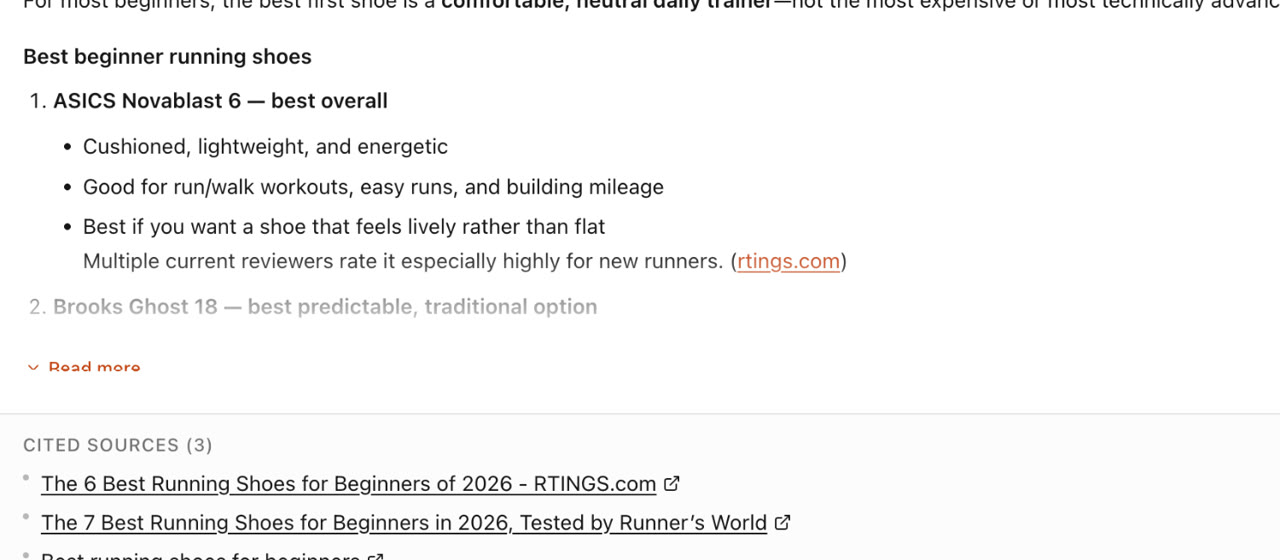
Before saving a question, run it once in Prompt Explorer. It defaults to ChatGPT and can add Claude, Gemini and Perplexity for comparison. If the answer is generic and names no brands, the question is too broad. If it names three competitors and not you, it is worth tracking.
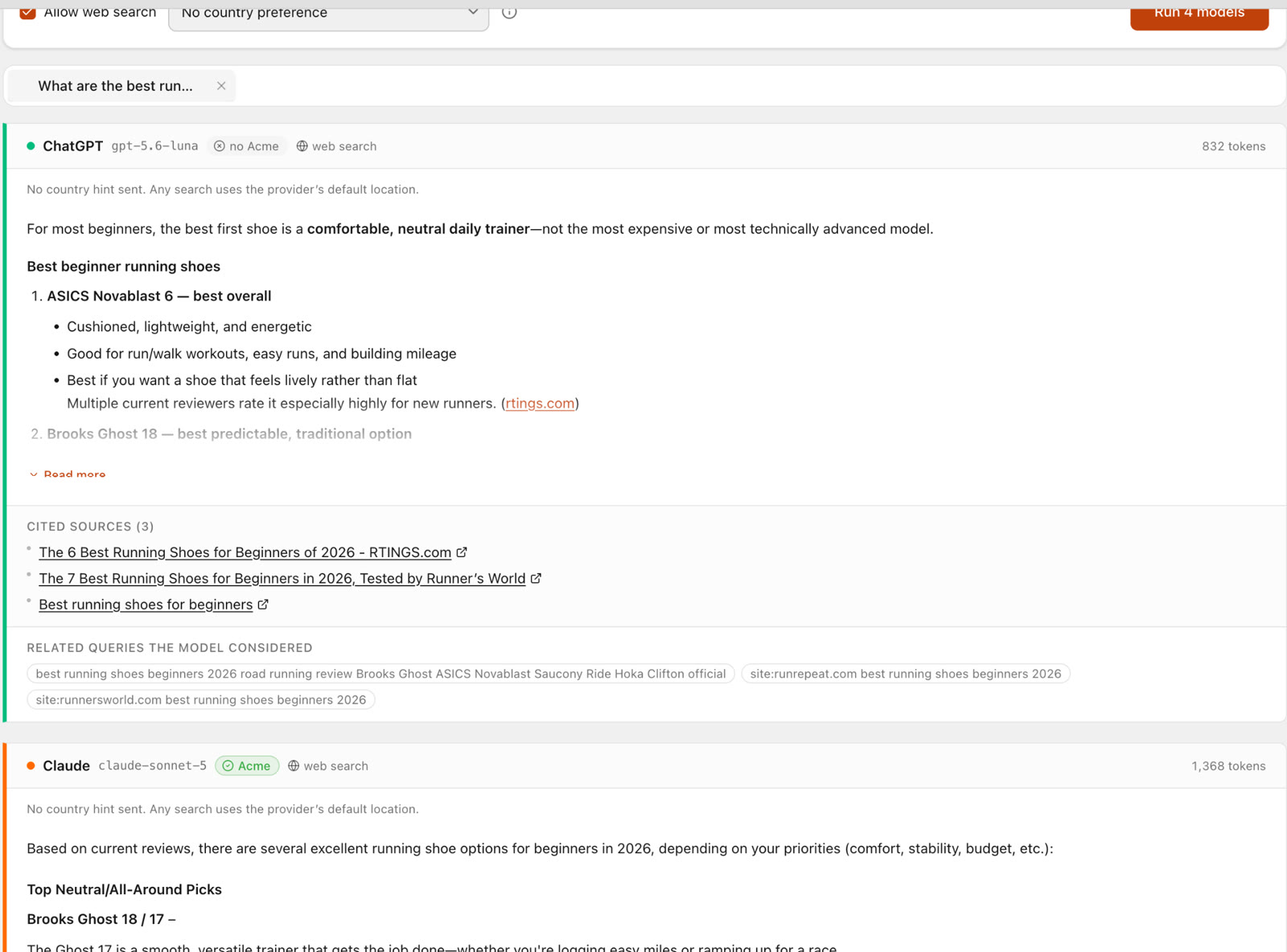
Prompt Explorer uses model APIs, so its answers can differ from the consumer-site answers that tracking collects. Use it to choose questions, not to measure.
Step 3: Save questions under topics
Group questions by topic, such as "pricing", "alternatives" or "integrations". Topics make the reports readable once you have dozens of questions.
Note one rule: editing a question's wording creates a new question. Earlier answers keep the wording they were collected for, so your trend never quietly mixes two prompts.
Step 4: Choose engines, market and schedule
ChatGPT and Gemini are selected by default. Google AI Overviews, Claude and Perplexity are also supported. Choose the market, then daily, weekly or monthly checks. Turning tracking on starts an initial check.
ChatGPT and Gemini answers are collected from their consumer sites. Claude and Perplexity have no consumer-site collection, so their checks use the model API at live pricing, which costs more per answer.
Step 5: Check the cost before it runs
SEO Sauna shows a cost estimate before a check or schedule starts, then bills each check as it collects answers. Run now collects live answers, usually within a minute, and costs more per answer than scheduled checks. Checks stop when your credits run out. Prompt Tracking needs only credits, so the 1,000 trial credits at signup are enough to try it.
Reading the results like a rank report
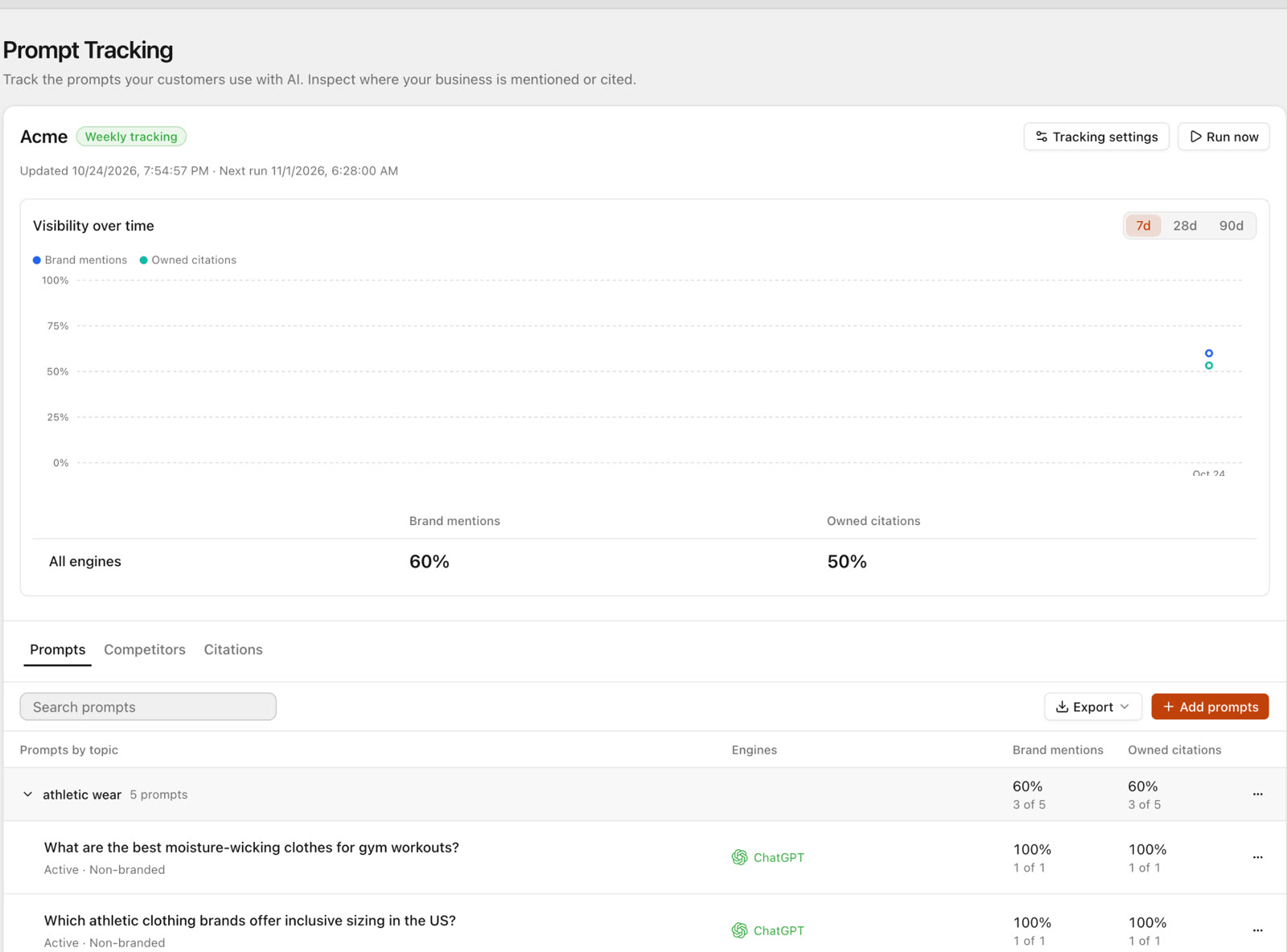
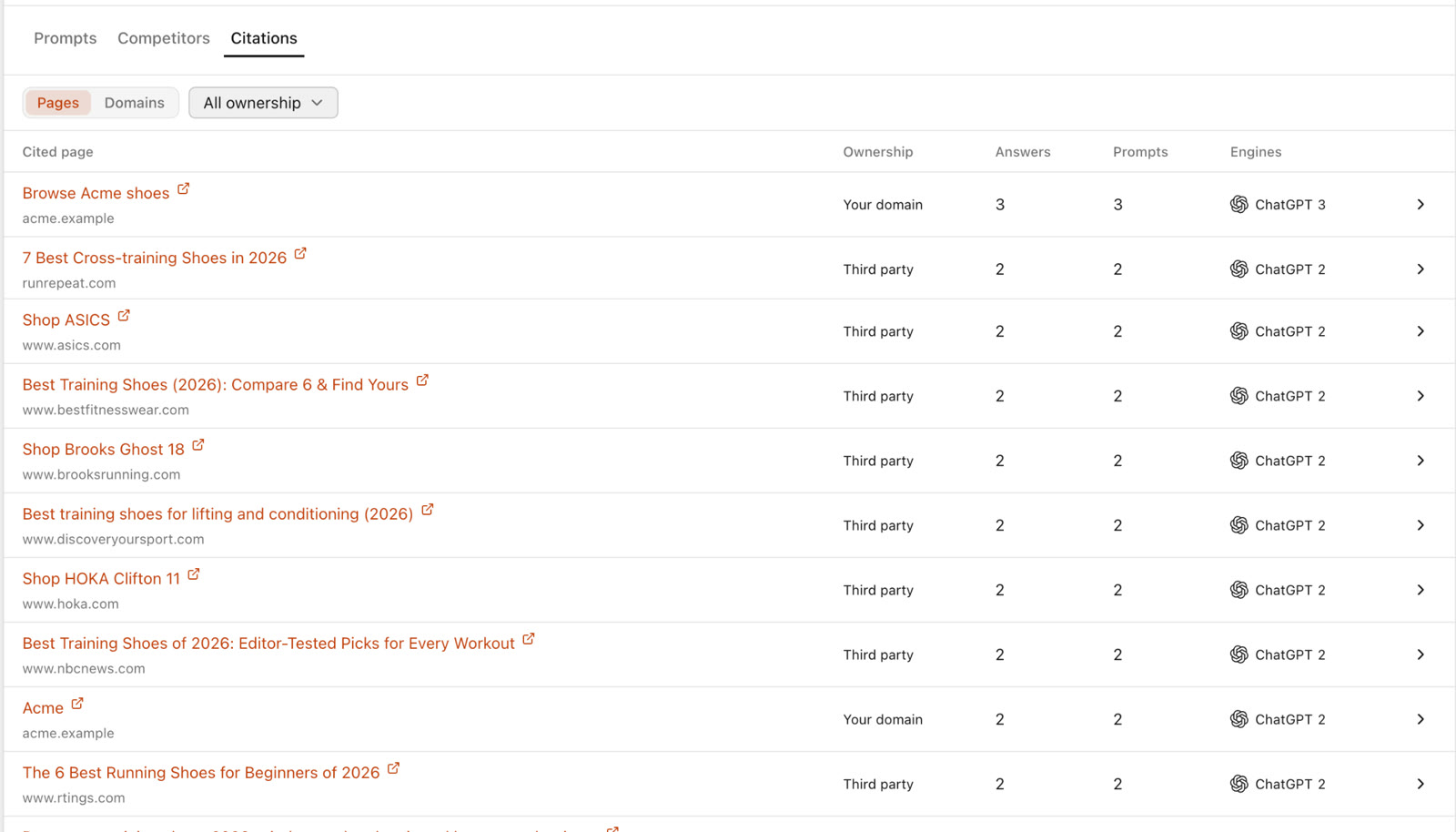
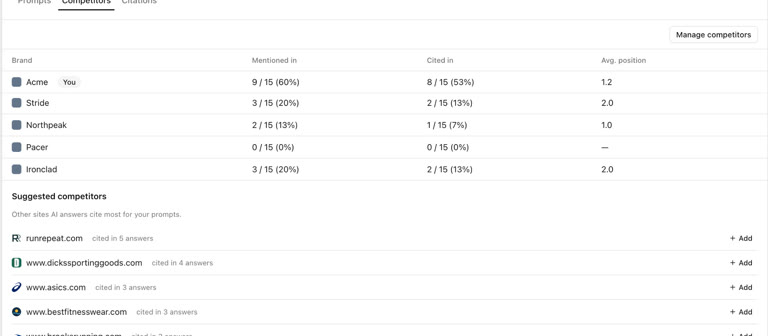
After a few checks, the trend chart shows how often you appear across checks over time, using the latest finished run per day. The Competitors tab shows which competitors from your project context appear and how often. The Citations tab shows which pages get cited, yours and everyone else's.
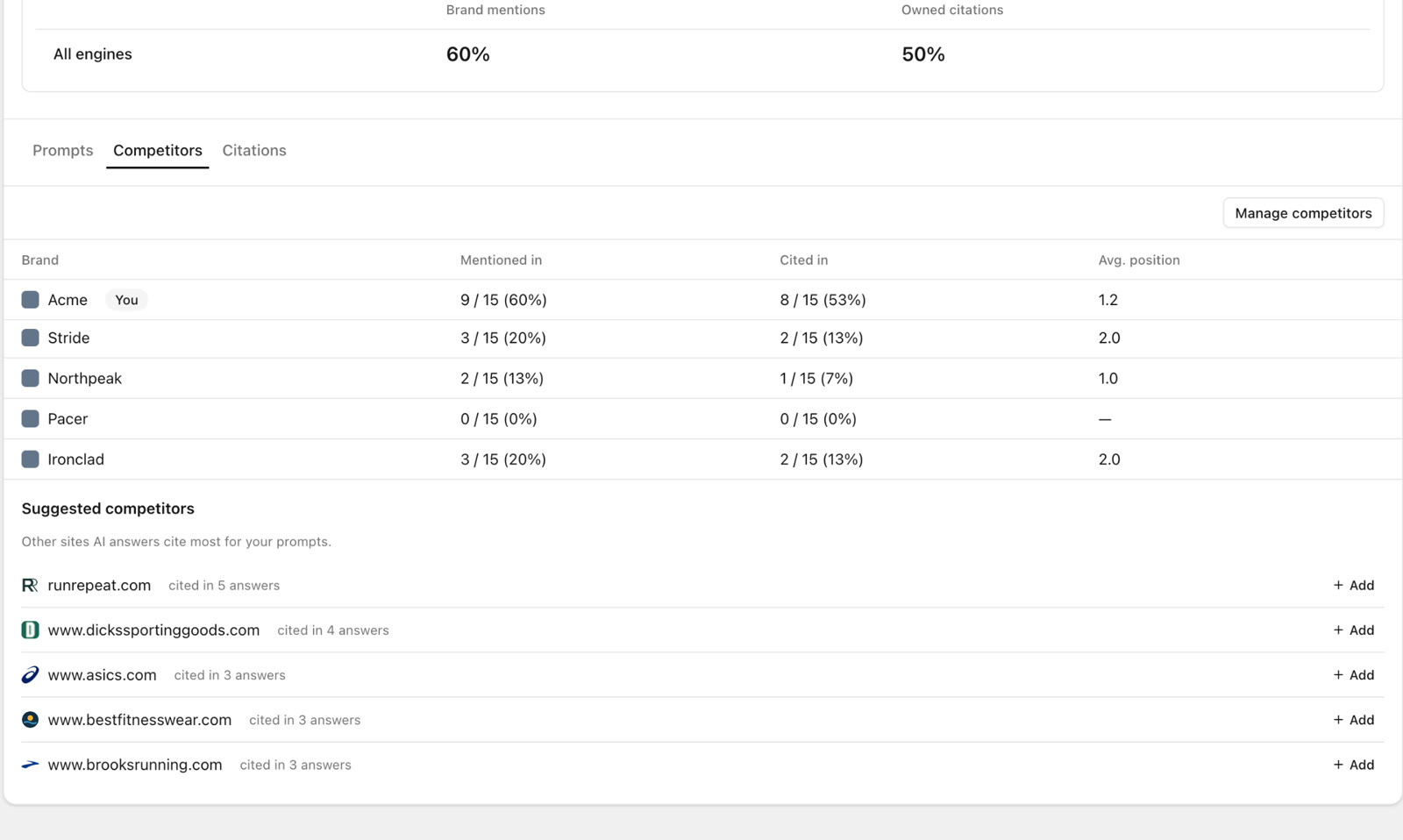
Read it the way you would read a rank report, with different questions:
- Which questions never mention us? These are your "not ranking" keywords.
- Where are we mentioned but not cited? The model knows you but has no page of yours it wants to link to.
- Which competitor shows up most often, and from which page? That page is your benchmark.
- Is the rate moving? Look at four to eight weeks, not one check.
Viewing and exporting saved results uses no credits, so you can review as often as you like. For what to do about each pattern, see how to track brand mentions in ChatGPT, which covers the improvement side in detail.
The honest limits
A ChatGPT tracker is useful, but it is not a Google rank tracker and should not be sold as one.
- Answers vary. Even with fixed questions and a fixed schedule, individual answers differ. Trust rates across many checks, not single results.
- There is no AI search volume. Nobody outside OpenAI knows how often a given question is asked in ChatGPT. SEO Sauna does not show an estimate because it cannot be measured. Prompt Research uses Google question data as a reasonable proxy.
- A failed check is not absence. Sometimes an engine does not return an answer. SEO Sauna does not count that as "your brand was not mentioned", and you should not either when you read the numbers.
- Your list defines your visibility. The tracker only measures the questions you chose. A high mention rate on easy questions says little about the market. Keep some hard, competitive questions in the set.
- Personalisation is not captured. Memory, chat history and account settings shape what individual users see. Tracking shows a clean, comparable baseline, not every user's experience.
None of this makes tracking pointless. It means you read it the way you would read a survey: directionally, over time, with a stable method.
Other tools that track ChatGPT
You have options beyond SEO Sauna. Two we checked on the vendors' own sites in October 2026:
- Ahrefs Brand Radar covers ChatGPT, Gemini, Perplexity, Copilot, AI Overviews and AI Mode, with Custom Prompts for your own questions from $50/month, free on paid Ahrefs Lite plans and above. Its strength is a large prompt database for market-level visibility beyond your own list.
- SE Ranking offers an AI Results Tracker that measures the share of prompts where answers mention your brand or link to your site, across engines such as ChatGPT, Google AI Mode and Gemini.
SEO Sauna's angle is that prompt tracking sits next to keyword research, rank tracking, site audits and Search Console in one €59/month plan, with credit-based costs you see before running, and that everything is available to your AI assistant through MCP.
Set it up from your assistant
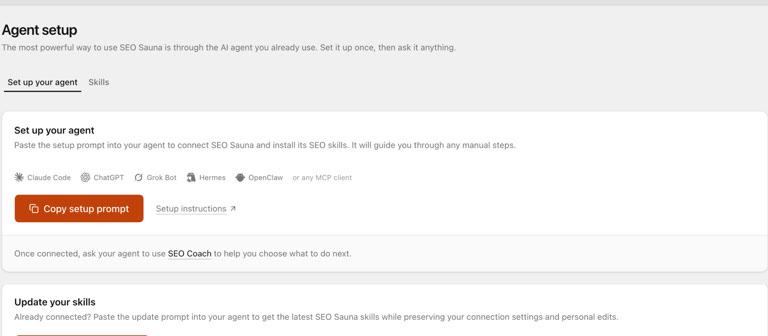
If you have connected SEO Sauna to Claude or ChatGPT, you can do the whole setup in one request:
Research questions about "[your category]" and pick 15 that a buyer would ask when choosing a tool. Group them into topics, then set up weekly tracking on ChatGPT and Gemini in the US. Show me the cost estimate first.
A month later:
Show our mention and citation rate per topic for the last four weeks, and the three competitors that appear most often.
More on engines, coverage and costs is in the AI Visibility docs and the AI visibility overview. To turn tracking results into fixes, run an AI discoverability audit; for Google's own AI answers, see the AI Overview tracker guide.
FAQ
Can I see my position in ChatGPT?
Not as a number from 1 to 10. ChatGPT writes an answer rather than listing results, so a tracker measures whether you are mentioned, whether you are cited and which competitors appear. The meaningful metric is your share of tracked answers over time.
How many questions should I track?
Start with 10 to 30 questions that buyers ask when choosing. That is enough to see patterns without a large credit cost. Add more once you know which topics matter.
Why do my results differ from what I see in ChatGPT?
Your own account has memory, history and location settings that shape answers. Answers also vary between runs. A tracker uses fixed questions in a chosen market, so it gives a consistent baseline rather than your personal view.
Is tracking daily better than weekly?
Not usually. Weekly is a good default for most brands and keeps costs low. Daily checks make sense around a launch, a campaign or a big content change, when you want to see movement quickly.
Does SEO Sauna track only ChatGPT?
No. ChatGPT and Gemini are selected by default, and you can add Google AI Overviews, Claude and Perplexity. All results appear in the same trend, competitor and citation views.
More from the blog
 AI discoverability audit: how to run an AI visibility audit
An AI discoverability audit shows whether ChatGPT, Gemini and Google AI name and cite your brand, and why not. Steps, prompts and what to fix first.
 ChatGPT MCP server for SEO: connect live SEO data
Connect an SEO MCP server to ChatGPT as a custom connection on Free or paid plans: step-by-step setup, error fixes and SEO prompts with real keyword data.