Semrush vs Ahrefs in 2026: an honest comparison
Semrush vs Ahrefs compared on keywords, backlinks, rank tracking, AI visibility and October 2026 pricing, plus when a lighter tool is all you need.
Semrush and Ahrefs are the two SEO tools most people end up choosing between. Both are excellent. Both cost well over $100 a month. And both have changed a lot in the past year, with AI visibility tracking, new plan structures and MCP servers for AI assistants.
So the old answer, "Semrush for keywords and marketing, Ahrefs for backlinks", is still roughly right but no longer the whole story. What you pay now depends heavily on how many keywords you track, how many people log in and whether you need to know what ChatGPT says about your brand.
This comparison covers data, keyword research, backlinks, rank tracking, AI visibility and pricing as of October 2026. At the end there is a short, honest section on when you need neither.
The short answer
- Choose Semrush if you want one platform for SEO, PPC research, content and competitive marketing, and your team will use most of it.
- Choose Ahrefs if backlinks and competitor research are the centre of your SEO work and you prefer a cleaner, SEO-first tool.
- Choose neither if you mostly need keyword research, rank tracking for a few hundred keywords, a backlink overview and a monthly audit, especially if you do that work inside Claude or ChatGPT.
Pricing in October 2026
Both vendors restructured their plans recently, so older comparison articles are often out of date.
| Semrush | Ahrefs | |
|---|---|---|
| Entry plan | SEO plan, about $140/mo | Lite, $129/mo |
| Entry plan with AI tracking | Semrush One Starter, about $199/mo | Lite includes 150 AI prompt checks |
| Mid plan | Semrush One Pro+, about $299/mo | Standard, $249/mo |
| Upper plans | Advanced and Enterprise, sales-led | Advanced $449/mo, Enterprise $1,499/mo (annual) |
| Budget option | Free plan, 10 reports/day | Starter $29/mo; free tier for your own site |
| Annual discount | Up to 17% | Up to 17% |
| Extra users | Paid add-on | $40 to $80/mo per user depending on plan |
| Dedicated AI visibility product | Included in Semrush One | Brand Radar, from $199/mo |
Sources: Semrush pricing and Ahrefs pricing, checked October 2026. Prices are monthly billing unless stated.
At entry level they are close. The gap opens as you add AI visibility, users and tracked keywords, and it opens in different places for each tool.
Data and databases
Both companies run their own large databases and have years of history behind them. That is the main thing you pay for, and it is something smaller tools cannot fully match.
Semrush is known for breadth: organic keywords, paid search and advertising data, traffic estimates and market research sit next to each other. If you research competitors' ads as well as their rankings, that combination is hard to replace.
Ahrefs built its reputation on its own crawler and backlink index, and its Site Explorer is still the tool many SEOs open first when they want to understand a competitor. History depth is tied to plan: 6 months on Lite, 2 years on Standard and 5 years on Advanced.
In practice, for a given keyword or domain, the two will show different numbers. Neither is "correct", because both are estimates. Pick one, use it consistently and compare trends rather than absolute values.
Keyword research
Both are strong. Semrush's Keyword Magic Tool is excellent for expanding a seed into thousands of ideas and grouping them. Ahrefs' Keywords Explorer is equally good at the core job and shows a clear view of the current results for each keyword, which helps when you judge whether a page can rank.
Where they differ is limits. Ahrefs Lite includes 1,000 credits per user each month, and every lookup draws from that, so heavy research days can run it down. Standard and above have unlimited credits. Semrush instead sets report and result limits per plan, so check the limits page for the tier you are considering.
Verdict: a draw on quality. Semrush is better if you also research paid keywords. Ahrefs is better if you want fewer, cleaner reports.
Backlinks
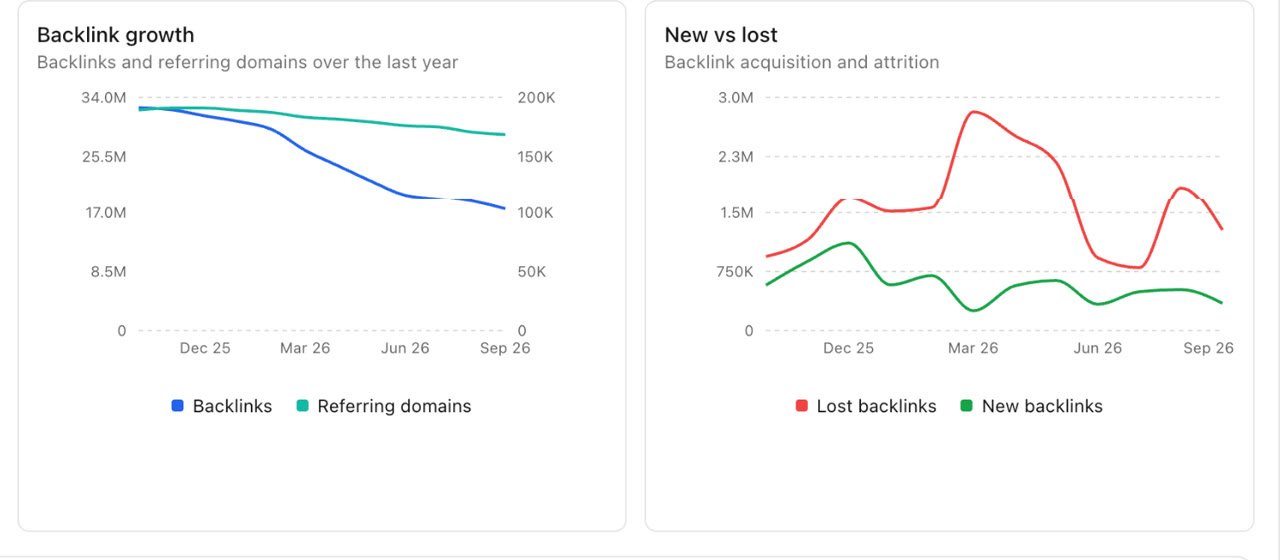
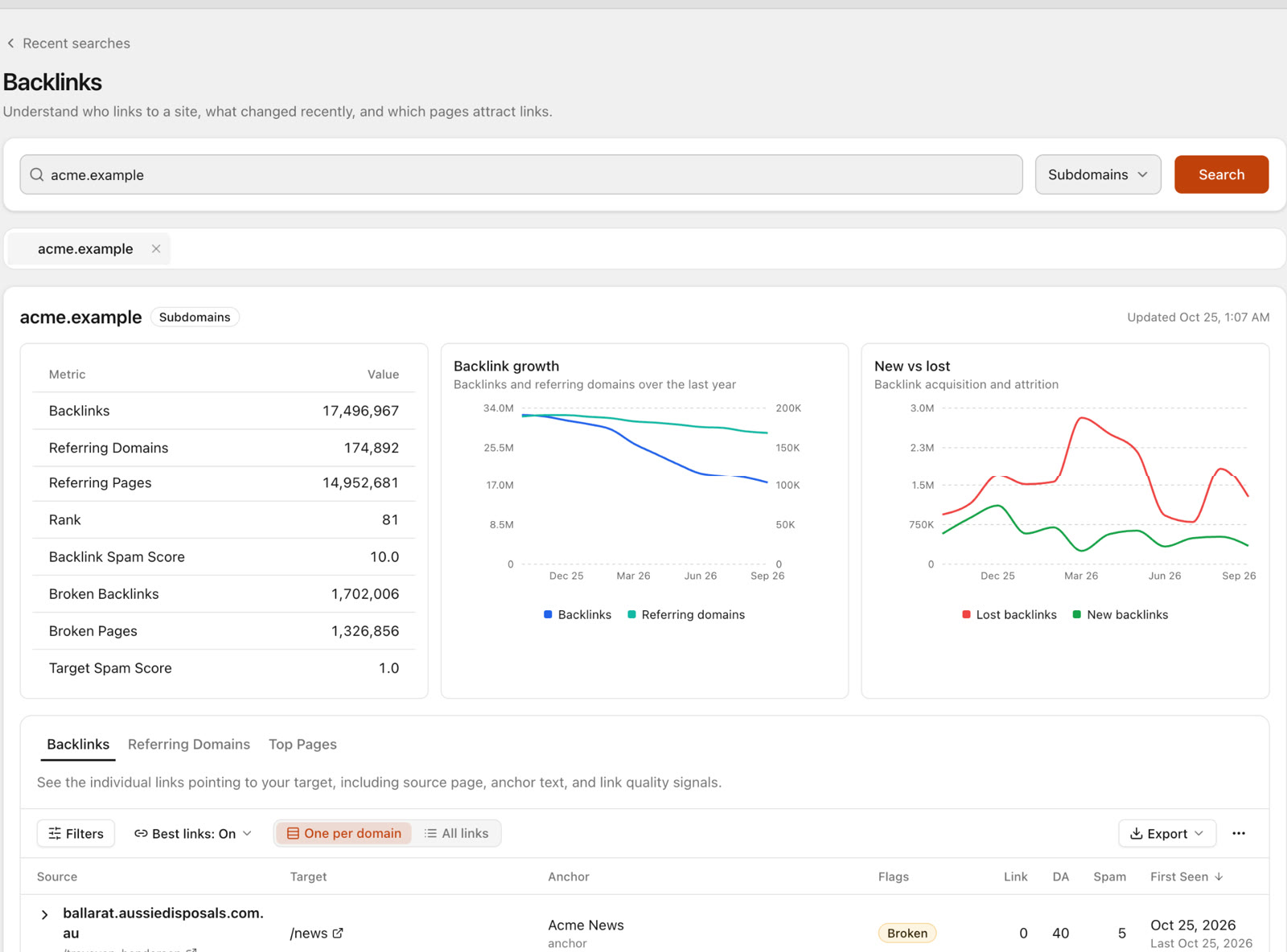
This is still Ahrefs' home ground. Its link data, new and lost links views and referring domain reports are the reason many agencies keep an Ahrefs seat even when they use something else for everything else.
Semrush's Backlink Analytics has improved a lot and is good enough for most link audits and competitor link research. If link building is a core service you sell, though, most practitioners still lean towards Ahrefs.
Verdict: Ahrefs.
Rank tracking
Semrush tracks keywords daily on every paid plan: 500 keywords on the SEO plan and Semrush One Starter, 1,500 on Pro+. Ahrefs includes 750 tracked keywords on Lite and 2,000 on Standard.
Both handle devices, locations and competitor comparison well. The practical difference is cost per keyword: if you track a few thousand keywords across several clients, both get expensive, and dedicated rank trackers are often cheaper. Our best rank trackers guide covers those.
Verdict: roughly even. Ahrefs gives more keywords at entry level; Semrush tracks daily by default.
Site audits
Both crawl your site and list technical issues: broken links, redirects, missing titles, duplicate content, slow pages. Ahrefs includes 100,000 crawl credits on Lite and much more on higher plans. Semrush sets its own crawl limits per plan. Either is fine for small and mid-sized sites.
Verdict: a draw for most sites.
AI visibility add-ons
This is where the two have diverged most in 2026.
Semrush moved AI visibility into its Semrush One plans. Starter includes 50 AI prompts tracked daily, Pro+ includes 100, and Advanced goes higher. If you want AI tracking from Semrush, plan on about $199/month rather than $140.
Ahrefs includes 150 checks on AI prompts in Lite (300 on Standard, 600 on Advanced), which is enough for a small test. Its full AI visibility product, Brand Radar, starts at $199/month on top of a plan, with extra custom prompt packages from $50/month.
Verdict: Semrush bundles it more simply. Ahrefs gives a free taste and charges separately for depth.
AI assistants and MCP
Both now offer MCP servers, so you can connect them to Claude, ChatGPT and other assistants. Ahrefs lists API and MCP access from Lite. Semrush includes MCP access with API units on its Starter, Pro+ and classic Pro and Guru plans. In both cases MCP calls draw from the same API allowance as direct API calls, so heavy agent use can run into limits.
Who each tool fits
| You are... | Better fit |
|---|---|
| A marketing team running SEO and paid search | Semrush |
| An agency selling link building | Ahrefs |
| An in-house SEO focused on one large site | Either; Ahrefs Standard is good value |
| A content team planning articles | Either; Semrush has more content tools |
| A consultant who wants AI tracking without add-ons | Semrush One |
| A freelancer or small business with one or two sites | Probably neither, see below |
When you need neither
A lot of people comparing Semrush and Ahrefs only use a small part of either. If your weekly SEO work is:
- researching keywords for the next few pages,
- tracking 100 to 500 keywords,
- checking a competitor's top pages and backlinks now and then,
- running a site audit once a month,
- looking at Search Console,
then you are paying for databases, history and reports you rarely open. A lighter tool is enough.
SEO Sauna (our product) is built for that case. For €59/month excluding VAT you get keyword research, domain research for any site, backlinks, rank tracking, site audits, Google Search Console and AI visibility tracking on ChatGPT and Gemini by default, plus Google AI Overviews, Claude and Perplexity. Projects are unlimited. The plan includes 17,000 usage credits (€17 worth) each month; rank tracking shows a cost estimate before it runs, and 100 keywords on one device, five pages deep, checked weekly costs roughly €1 to €2 a month.
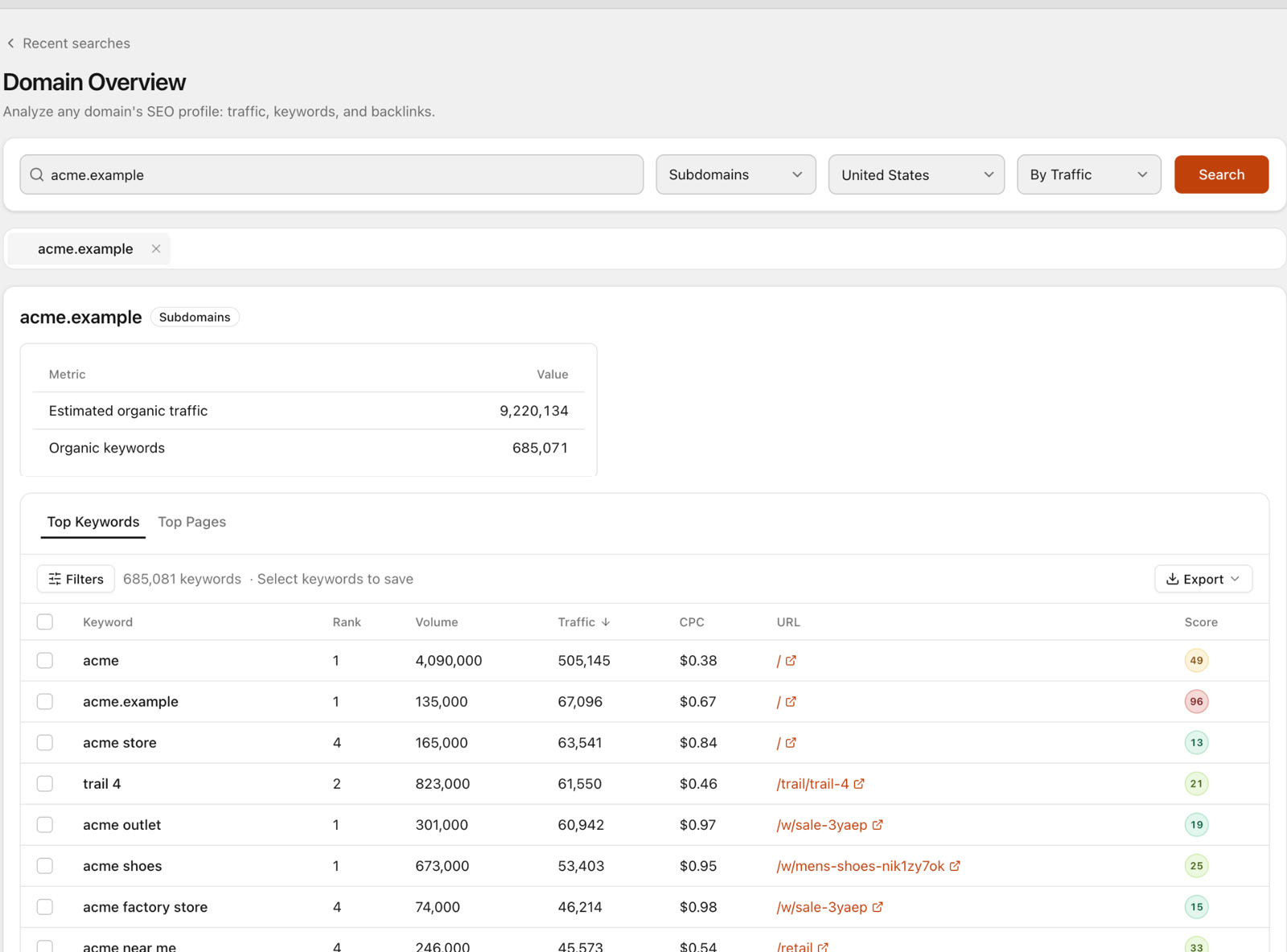
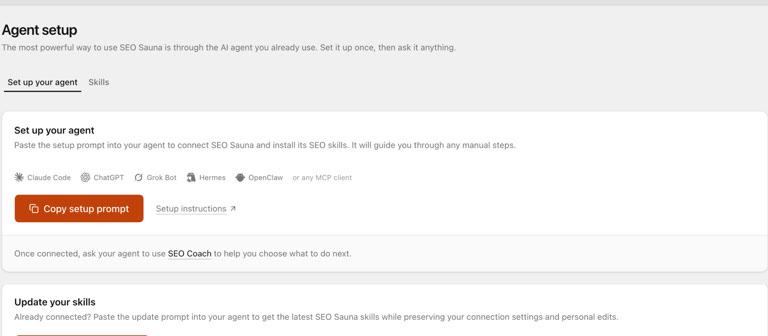
It is especially practical if you already work inside an AI assistant. SEO Sauna runs an MCP server at https://app.seosauna.com/mcp that works with Claude, ChatGPT (custom connection), Cursor and Codex, so you can ask "which of my pages rank 5 to 20 with good impressions, and what should I change?" and the assistant fetches the Search Console and ranking data itself. Search Console reads use no credits. See Connect your AI assistant and the Claude SEO guide.
The honest trade-off: SEO Sauna's data comes mainly from DataForSEO, not its own crawler, and it has fewer reports and less history than Semrush or Ahrefs. It has no PPC or content marketing suite. If you need those, pick one of the big two. If you don't, start free with 1,000 trial credits and no card at app.seosauna.com, or read SEO Sauna 101 first. For more options, see our list of Semrush alternatives.
FAQ
Is Semrush or Ahrefs better for beginners?
Ahrefs has the simpler, more focused interface, so many beginners find it easier. Semrush has more tools and more menus, which takes longer to learn but covers more of marketing. Both have learning resources and free tiers to test with.
Which is cheaper, Semrush or Ahrefs?
At entry level Ahrefs Lite ($129/month) is slightly cheaper than the Semrush SEO plan (about $140/month) as of October 2026. With AI visibility, Semrush One Starter costs about $199/month, while Ahrefs Brand Radar starts at $199/month on top of a plan.
Which has better backlink data?
Most SEOs still rate Ahrefs higher for backlinks, thanks to its own crawler and long-running link index. Semrush's backlink tools are good enough for most audits and competitor checks.
Can I use Semrush or Ahrefs with ChatGPT or Claude?
Yes. Both offer MCP servers that connect to AI assistants, and both draw MCP usage from the plan's API allowance. SEO Sauna also has an MCP server that includes your Search Console data at no credit cost.
Do I need both Semrush and Ahrefs?
Rarely. Some agencies keep both for cross-checking data, but for most teams one is enough. If you only use the essentials, a lighter tool may replace both.
More from the blog
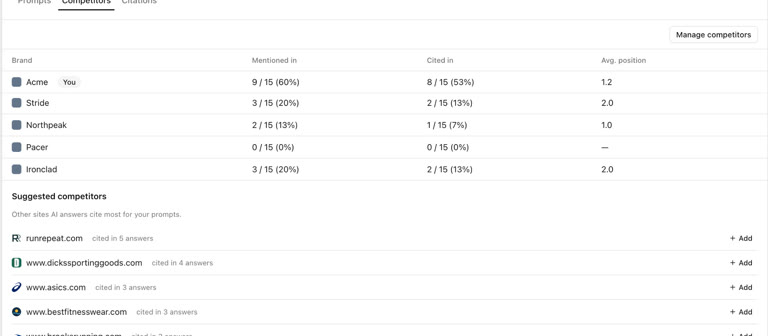 AI discoverability audit: how to run an AI visibility audit
An AI discoverability audit shows whether ChatGPT, Gemini and Google AI name and cite your brand, and why not. Steps, prompts and what to fix first.
 ChatGPT MCP server for SEO: connect live SEO data
Connect an SEO MCP server to ChatGPT as a custom connection on Free or paid plans: step-by-step setup, error fixes and SEO prompts with real keyword data.