Link prospecting: a practical process that finds real links
Link prospecting step by step: pick a linkable asset, find prospects in competitor backlinks and SERPs, qualify them and write outreach that lands.
Most link building fails before the first email is sent. The prospect list is a scraped export of 2,000 domains, half of them irrelevant, a quarter of them link farms, and the outreach template could have been sent to any of them. Reply rates are low because the list never had a reason to link in the first place.
Link prospecting is the part that decides whether outreach works: finding the specific pages and people who have a real reason to reference your page. A short list of 30 well-chosen prospects usually beats 2,000 random ones.
This guide walks through a practical process: choosing what to promote, finding prospects through competitor backlinks and search results, qualifying them, writing outreach that respects the recipient, and how to run the same process with an AI agent and backlink data in SEO Sauna.
What link prospecting is (and is not)
Link prospecting means finding websites and pages that are likely to link to a specific page of yours, and working out why they would. The output is a list of prospects, each with a reason, an angle and a contact path.
It is not buying links, joining link exchanges or blasting every site with a "write for us" page. Those tactics break Google's spam policies, and they also tend to fail on their own terms: the links are weak and the effort is wasted. Everything below is about earning links editors would give anyway if they knew your page existed.
Step 1: Start with something worth linking to
Prospecting begins with the asset, not the list. Ask a blunt question: why would someone who has never heard of you reference this page?
Good linkable assets usually fall into a few types:
- Original data: a survey, a benchmark, statistics from your own product usage.
- Tools and templates: a calculator, a checklist, a spreadsheet template.
- The best guide on a narrow topic: clearer, more current or more complete than what ranks now.
- A strong point of view: a well-argued position experts will quote or argue with.
- Product pages that belong in lists: if "best X tools" articles exist, your product page can be a fair candidate.
If you cannot write one sentence explaining why a stranger would cite the page, fix the page before you prospect for it.
Step 2: Find prospects
There are two reliable sources of prospects, and they complement each other.
Competitor backlinks
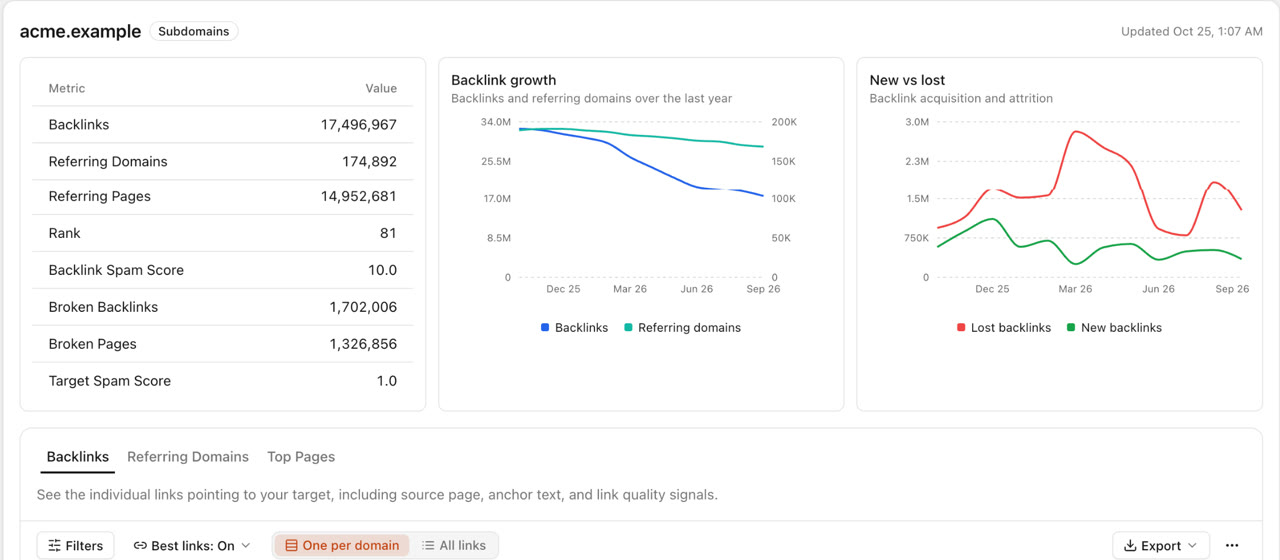
Sites that link to competitors already link to pages like yours. Look at the backlink profiles of two to five competitors, focusing on the pages that earned links for the same reason your asset would: a competitor's statistics page, a comparable tool, a similar guide.
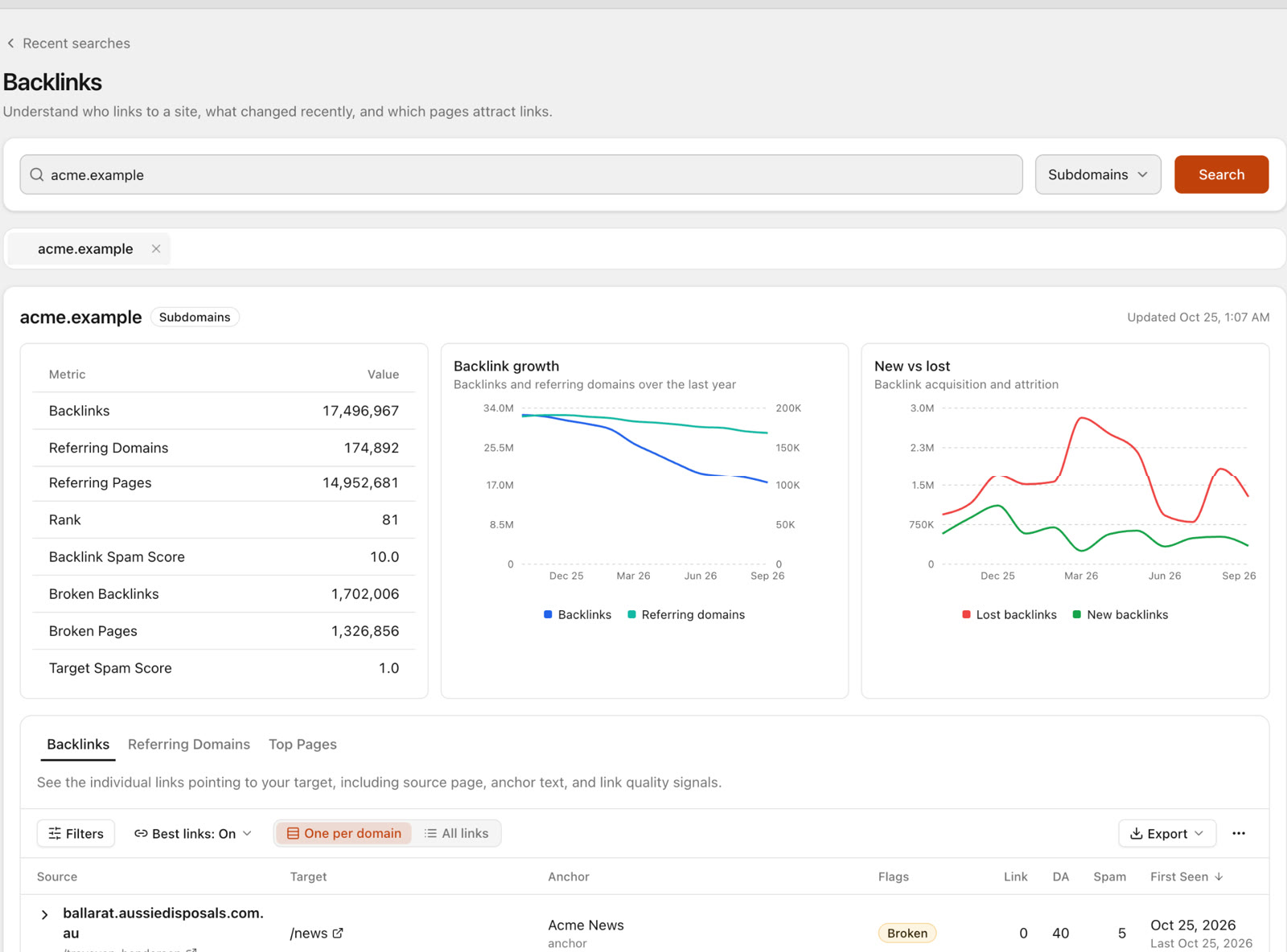
Look for patterns, not just individual links. If several competitors are listed in the same industry directories, mentioned in the same publications' roundups or linked from university resource pages, that is a prospect type you can work systematically.
Large tools are strong here. Ahrefs, for example, has a Link Intersect feature that lists domains linking to several competitors but not to you. If you have access to a big link database, use it.
Search results
Search results show who writes about your topic right now. Build queries from your asset and run them:
| Query pattern | What it finds |
|---|---|
<topic> resources |
Resource pages and curated link lists |
best <category> tools |
Listicles you could be included in |
<competitor> alternatives |
Comparison pages that mention similar products |
<topic> statistics |
Pages that cite data and need current sources |
<topic> guide / <topic> examples |
Articles that could reference a better or newer source |
<topic> templates |
Pages collecting templates and tools |
<topic> for <audience> |
Niche articles for a specific audience |
Pages ranking in the top 10 for these queries are valuable twice: they get traffic, and the people who maintain them are actively interested in the topic.
Step 3: Qualify the prospects
This is where most of the value is. For every prospect, check:
- Topical relevance. Does the page actually cover your topic? A strong site with no topical fit is a poor prospect.
- Editorial page. Articles, resource pages, comparisons, statistics pages and curated lists are good. Homepages, login pages and unrelated forum threads are not.
- Signs of life. Is the page maintained? Recent updates and working links suggest someone will read your email.
- Real audience. Does the site rank for anything and have a meaningful link profile of its own? A quick domain check answers this.
- Red flags. Thin affiliate pages, "sponsored post" price lists, link farms and sites linking to everything. Also flag direct competitors: they rarely link to you unless the page is a fair comparison.
Then give each prospect an angle. Common ones:
| Angle | When it fits |
|---|---|
| Missing resource | The page lists resources and yours is clearly relevant |
| Better current data | The page cites statistics that are outdated or unsourced |
| Useful tool or template | The audience would use it directly |
| Comparison inclusion | A "best tools" or "alternatives" page that omits a fair candidate |
| Expert input | The article would benefit from a quote or supporting reference |
| Broken link | The page links to a resource that no longer works and yours covers the same need |
Step 4: Find the right contact
Send the email to the person who can actually change the page. In order of preference: the article's author, the section editor, the site's editorial contact, then a general contact form.
Where to look: author byline pages, contact pages, editorial guidelines, about and team pages, publication mastheads, and professional profiles such as LinkedIn, X or Bluesky. Record the source URL for every contact detail you find, and never guess an email address. If you cannot find a contact after a reasonable search, a reputable contact-finding service such as Hunter can help; it has a free plan with 50 monthly credits and paid plans from about €49/month (as of October 2026, prices shown in euros).
Step 5: Write outreach a human would answer
Good outreach is short, specific and easy to say yes to:
- Mention their page specifically. Show you read it.
- Give one reason. The angle from step 3, in one sentence.
- Make the ask concrete. Which section, which link, which claim.
- No pressure, no follow-up storm. One polite follow-up is enough.
Example:
Hi Maria, your guide to choosing an invoicing tool for freelancers is one of the clearest I have read, especially the section on VAT handling. The statistics paragraph cites a 2021 survey; we published fresh data from 1,400 freelancers this month, including the same question. Here is the page: [link]. Happy to share the raw numbers if useful.
Track who you contacted, when and with what result. A spreadsheet works for small campaigns. Outreach CRMs such as BuzzStream or Pitchbox help when several people run campaigns at once.
How SEO Sauna's Link Prospecting skill does it
SEO Sauna connects to AI assistants such as Claude, ChatGPT, Cursor and Codex through an MCP server. The Link Prospecting skill is a step-by-step workflow the agent follows using SEO Sauna's SERP, backlink and domain data, plus whatever web search or browser tools your AI client has for finding contacts.
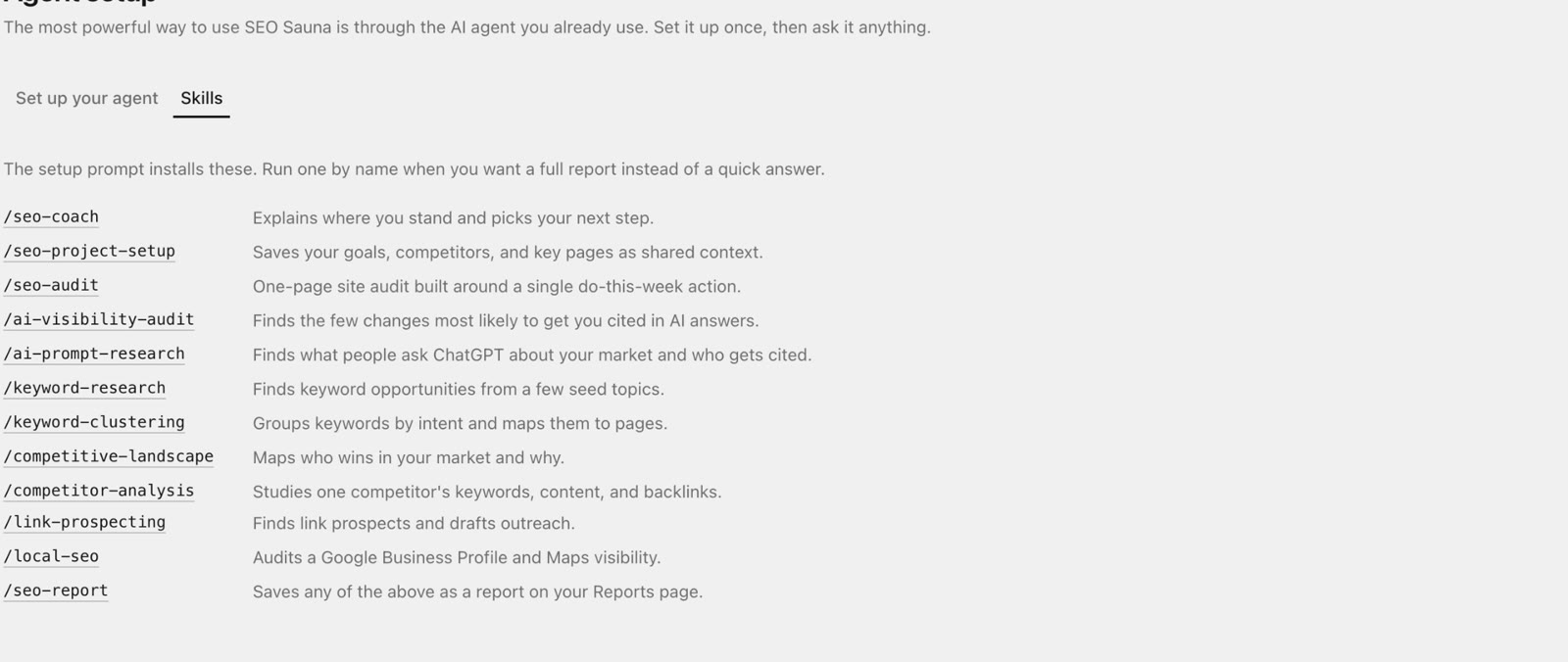
What the agent does
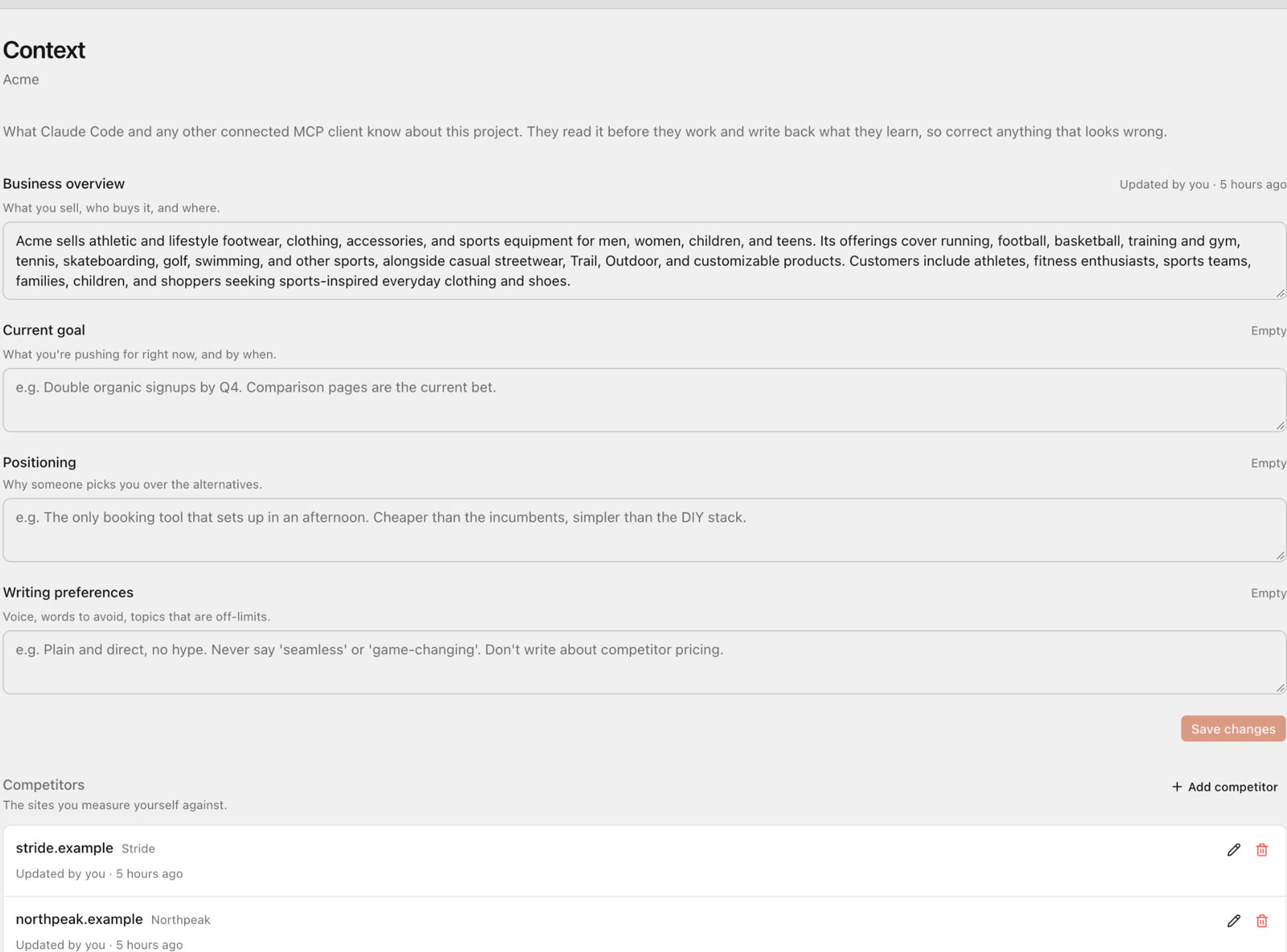
- Clarifies the asset and the reason someone would reference it. It reads your saved project context first: your positioning supplies the reason, and your saved competitors are the backlink profiles to study. If either is missing, it asks you or proposes competitors from the search results and confirms them with you.
- Builds 5 to 10 prospecting queries from the patterns above and runs them against live Google results.
- Looks at competitor backlink and referring-domain overviews for the strongest competitor domains or pages to see where their links come from. If backlink evidence is not available, it continues with SERP evidence.
- Qualifies the strongest prospect domains with domain data and, when topical fit matters, the keywords a site ranks for.
- Filters hard. It keeps editorial, topically relevant pages and deprioritises homepages, login pages, thin affiliate pages, spam, unrelated forums and direct competitors.
- Finds contact paths for the best prospects with your client's web or browser tools, and records the source URL for every contact detail.
- Drafts outreach tied to the specific page and reason.
For local businesses it can also use local search and Maps data to find nearby competitors, then look for chambers of commerce, associations, community pages and local directories.
Guardrails built into the skill
- It does not invent email addresses, names or social handles.
- It does not say SEO Sauna found a contact unless an SEO Sauna tool returned it; contacts are attributed to the web or browser source used.
- It flags direct competitors and likely paid placements.
- It avoids mass outreach and personalises every draft by page and reason.
- It reuses research from the last 30 days in the project's research log instead of buying the same data again.
What you get back
A report saved to your SEO Sauna project: the best outreach angle and the prospect type to work first, a prospect table (URL, site, source, angle, contact path, priority), the evidence for each key prospect, two or three reusable outreach drafts, limitations such as contacts not found, and an ordered send list.
A typical request:
Find link prospects for our freelancer invoicing statistics page. Use our saved competitors' backlinks and the search results for invoicing statistics, freelancer tools and invoicing guides. Prioritise relevance over volume and include source URLs for any contacts.
An honest note on data: SEO Sauna gives backlink and referring-domain overviews for any domain, mainly from DataForSEO. Ahrefs and Semrush have larger link indexes and more link-specific reports. SEO Sauna's advantage is that SERP research, competitor backlinks, qualification and outreach drafts happen in one agent conversation, at a flat €59/month (excl. VAT) with 17,000 credits included. See SEO Sauna 101 for the full picture, or the Claude SEO guide for the setup.
FAQ
What is link prospecting in SEO?
Link prospecting is finding the websites and pages most likely to link to a specific page of yours, and noting why each would. It comes before outreach and largely decides whether outreach works.
How many link prospects do I need?
Fewer than most people think. For one asset, 20 to 50 well-qualified prospects with a clear angle each is a solid campaign. Relevance matters far more than list size.
Where do I find link prospects?
The two most reliable sources are competitor backlinks, which show who already links to similar pages, and Google results for your topic, which show who writes about it now. Resource pages, comparison pages and statistics pages are often the best targets.
Is link prospecting with AI safe?
Yes, if the AI works from real data and you review the output. The risk is an AI inventing contacts or writing generic mass emails. SEO Sauna's skill is built to avoid both: it records sources for contact details and personalises each draft.
Can I do link prospecting without Ahrefs or Semrush?
Yes. Search results alone give you many prospects, and backlink overviews from a smaller tool show where competitors' links come from. A big link database finds more, but a focused list built from SERPs and a few competitors is often enough to start.
More from the blog
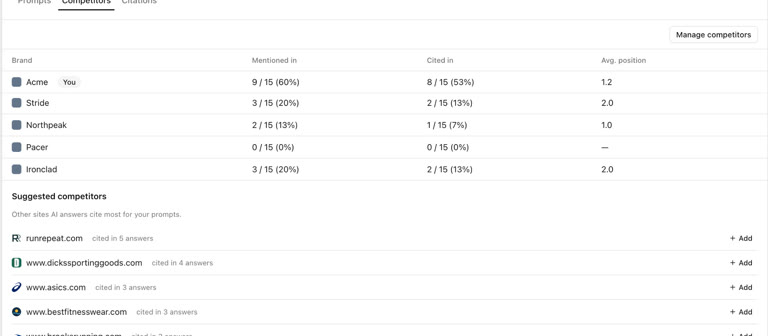 AI discoverability audit: how to run an AI visibility audit
An AI discoverability audit shows whether ChatGPT, Gemini and Google AI name and cite your brand, and why not. Steps, prompts and what to fix first.
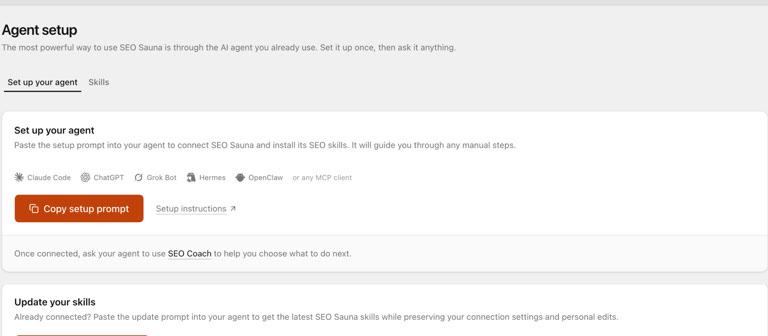 ChatGPT MCP server for SEO: connect live SEO data
Connect an SEO MCP server to ChatGPT as a custom connection on Free or paid plans: step-by-step setup, error fixes and SEO prompts with real keyword data.